


I write essays on Substack. Naturally, I also shitpost on X for sport.
And this year I’ve started showing up on the one platform where “I got fired and it was the best thing that ever happened to me” outperforms actually building the thing.
On LinkedIn, everyone is humbled and grateful. Failures are secretly masterclasses. Layoffs? Blessings in disguise, obviously.
The transparency is immaculate – performed with the precision of an Apple keynote, workshopped to hit the emotional beats, posted at 8:47 AM because the algorithm rewards early-morning vulnerability.
I respect the craft. Sincerely. It takes skill to be that polished while calling it raw.
But I can’t do it. I’ve tried writing my own stuff in that voice and it comes out like a TED talk had a one-night stand with a fortune cookie.
How do you LinkedIn-ify existential dread and compound interest? Hmm… how ’bout “Thought leader at the intersection of civilizational collapse and capital allocation”?
Darn… none of it survives the “3 things I learned from failing” format, and I’m not sanding it down until it does.
For a while I mistook that for being above the whole thing. Too authentic for the cringe. Then I heard myself say “I HAVE AN ARTICLE ON THAT” out loud – to friends, to strangers, to a bloke at the beach who’d made the mistake of mentioning opportunity cost.
I’m one QR code away from cornering people about my proverbial podcast. So the disease predates the platform. LinkedIn is just my final form.
There are two kinds of cringe.
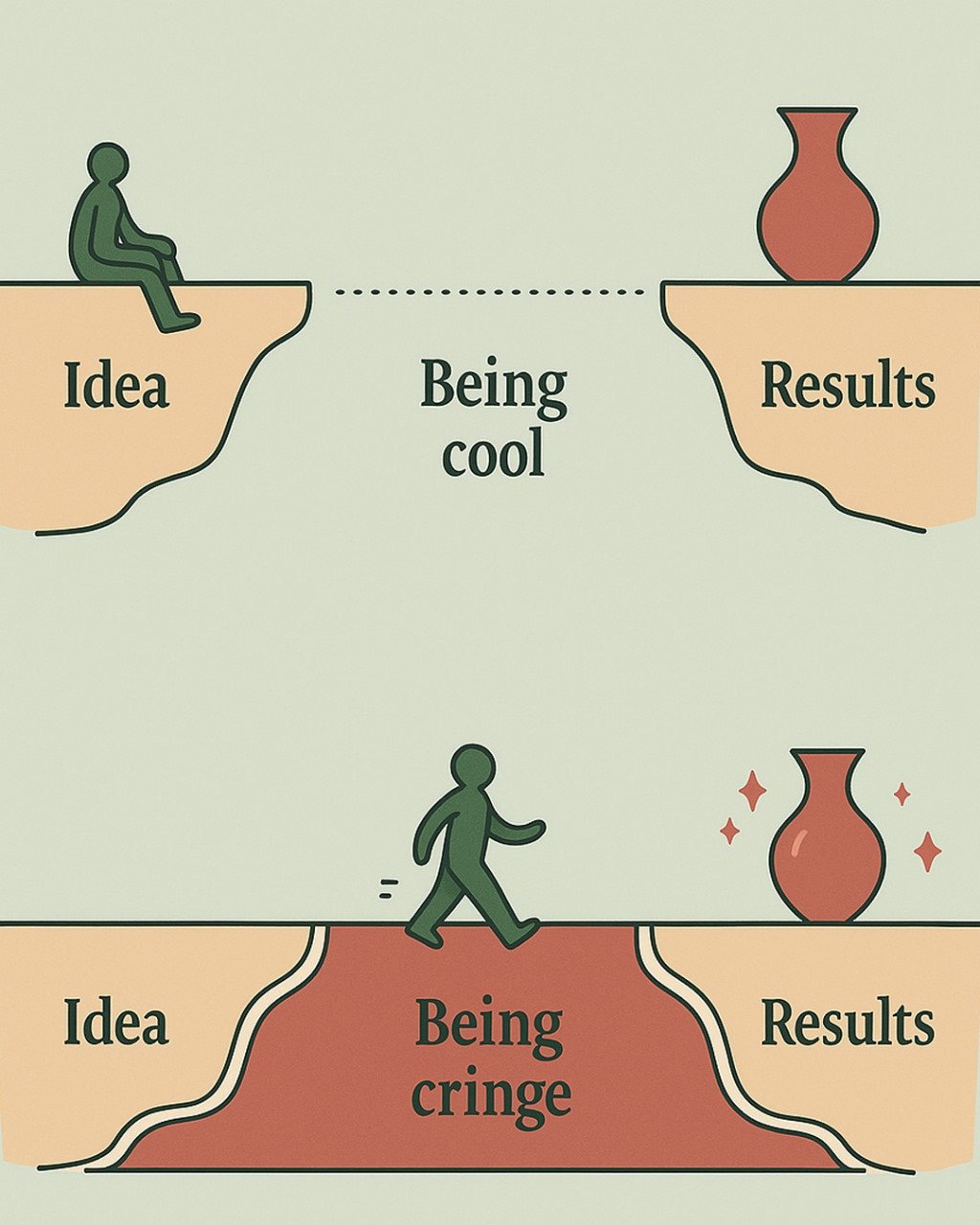
The manufactured kind: the 8:47 AM vulnerability, the fired-and-grateful, the raw performed to spec. And mine: half-baked ideas, open uncertainties, a blog that reads like a diary entry because that’s what it is.
I can’t do the first kind.
Call me a content cringeator, scaling my own private cringemountain.
Related: Human Language Model – the LinkedIn bio, explained.
