

Custodianship does a flawless impression of ownership.
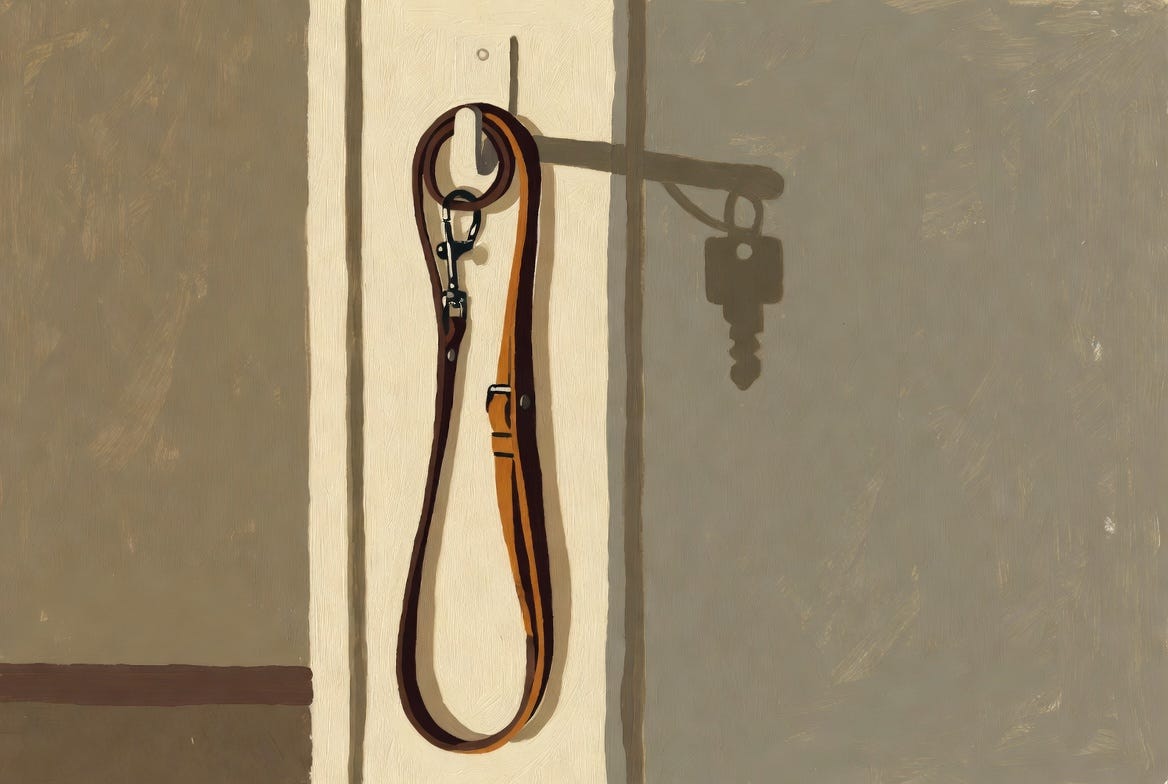
Two years ago, by somebody else’s infinity pool on the Gold Coast (aka when I escaped Plato’s Cave), I wrote that I was dog-sitting a life I hadn’t built yet. I meant the mansion. It turns out the line fits a flat and a job just as well – all of it functioning, none of it chosen, me taking someone else’s arrangement for a walk and calling it mine.
What I didn’t understand then is how common the arrangement is, and how good the impression.
Custodianship looks exactly like ownership from every angle except one. You feed the job. You water the relationship. You keep the city’s routines alive like houseplants that came with the lease.
The maintenance is real work, which makes it so convincing – surely nobody would work this hard on something that wasn’t theirs.
Samuelson and Zeckhauser named the mechanism in 1988: status quo bias, the finding that people overwhelmingly stick with default options they would never actively choose.
The experiments used pension plans and insurance policies, but the finding generalizes viciously. Nobody picks the dog. The dog is simply there, already named, already fond of you (because of course he is “a good boi”), already needing its walk.
Attending to what’s already there feels like living, right up until you ask the question: if this were offered to me today, empty-handed, would I take it?
I’ve run that question on my own life at intervals since, and I’d love to report clean results. Sike!
Some arrangements I audited and kept, and keeping them made them mine.
Others I’m fairly sure I’m still just walking. The problem is the two states feel identical from the inside; the leash sits the same in the hand either way.
The dog-sitter’s tell, if there is one, is the calendar: he always knows, however vaguely, when the owners come back.
The custodian of a life keeps a version of that date too – the someday when the real thing starts, after this stretch of looking after what’s here.
I had a date like that for years. But I’ve stopped setting one.
Related: Escaping Plato’s Cave – where the line comes from.

Sources: Samuelson & Zeckhauser, Journal of Risk and Uncertainty 1:7–59, 1988