


TL;DR: The pressure to achieve everything simultaneously comes from treating your life like a portfolio. The alternative is recognizing that nature has seasons, and you are not a machine that runs on a flat line.
Consider the ancient mosaic found in Antioch: a reclining skeleton casually holds a cup of wine.
The Greek word above it reads ΕΥΦΡΟΣΥΝΟΣ – cheerful.
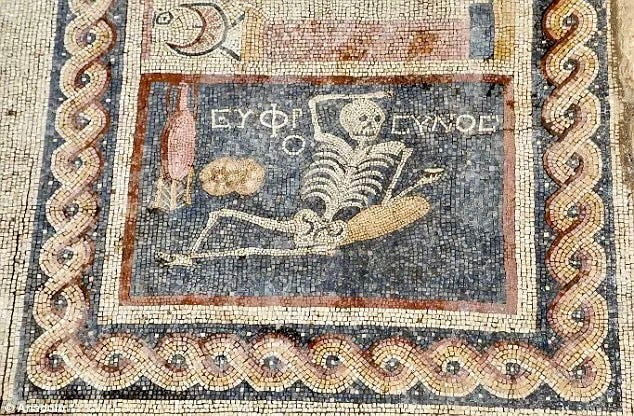
This image became a famous internet meme, captioned with optimistic wisdom: “YOLO – enjoy life, you only live once.”
But scholars believe this misses the point entirely. The mosaic is part of a sequence. The middle panel shows figures rushing frantically toward a sundial, labeled “late-to-the-banquet” and “pesky” – one has lost his shoe in the rush.
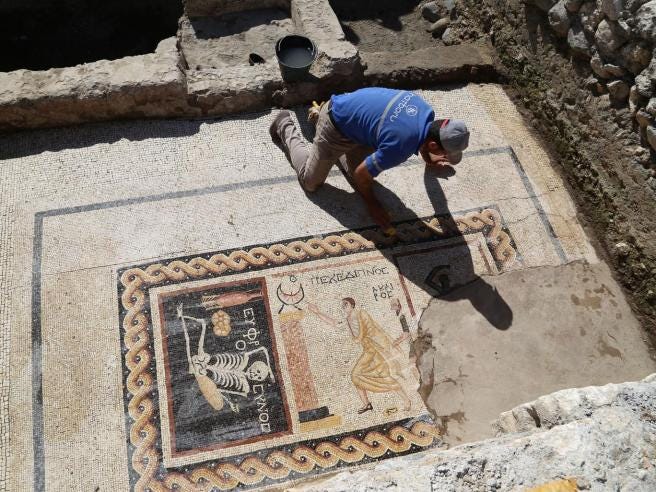
The contrast is deliberate and brutal: the dead man reclines in peace with his wine, while the living run themselves ragged, losing their shoes trying to make it to dinner on time.
The mosaic observes that only the dead escape the anxiety of trying to be everywhere at once.
The modern world chose to read it backwards anyway.
The Financialization of Everything
Somewhere along the way, we started treating our lives like investment portfolios.
The logic makes sense: diversify your investments, hedge your bets, maintain balanced exposure across all asset classes. In finance, this is wisdom. In life, it’s poison.
The financialization of everything is the habit of treating every dimension of your life as an asset class that must outperform its benchmark. Career, health, relationships, fulfillment – all running simultaneous P&L statements, all expected to appreciate.
Every hour must yield measurable returns. Relationships need to “add value,” hobbies must become side hustles, and god forbid you spend a Saturday doing something that doesn’t compound.
We wake up each morning and run a portfolio review on our own lives.
Career: underperforming the benchmark.
Health: down 3% since the holidays.
Love: stable but illiquid.
Fulfillment: pending regulatory approval.
We’ve adopted economic thinking for deeply non-economic domains. And economic thinking demands diversification – which, in life, produces paralysis.
The paralysis comes from too many options, all demanding attention at once.
I experienced this acutely after returning home with a head full of ideas and a body craving routine. The obvious move was to “catch up” on everything at once. Instead, I found myself staring at the ceiling, unable to commit to anything because every choice felt like a betrayal of something else.
The problem was that I’d accepted the premise that success meant running all four lanes of the race simultaneously.
We’ve been taught to be ashamed of single-minded focus. So instead, we attempt a diluted version of everything, becoming mediocre at four things instead of exceptional at one.
When I fail to prioritize, wanting becomes directionless. I’m not pursuing desire – I’m responding to the loudest notification.
The anxiety comes from trying to genuinely want four different things at the same time.
Living in Seasons
In traditional farming, fallow land is not a waste. You intentionally leave a field unplanted for a season so it can rest and replenish its nutrients. You let the soil breathe so it doesn’t turn to dust.
The ancient Greeks, who knew something about revelry and its right timing, had two words for time: chronos and kairos.
Chronos is chronological, measurable time – the ticking clock, the deadline, the calendar invite.
Kairos is the right time, the opportune moment, the season when something becomes possible.
We’ve become obsessed with chronos: optimizing every hour, maximizing productivity, racing against the sundial like the fools in the mosaic. But the good life is built on kairos – recognizing that different ambitions have different seasons, and that trying to force them all into the same moment destroys them all.
You can have the career breakthrough. You can have the year of deep travel. You can have the season of transformed relationships. You can have the chapter of physical reinvention.
You just can’t have them in the same week.
The sequential life has chapters. You must choose which one you’re in.
Which domain gets your genuine attention for the next year or two? Which ones will you intentionally let lie fallow?
Let’s be honest about the trade-off:
My ‘Travel Chapter’ meant I missed a friend’s wedding. My ‘Investor Chapter’ means my LinkedIn looks like a ghost town.
The fear of letting something lie fallow is rooted in the belief that pausing equals permanent loss. But this is only true if you think of life as a single, continuous sprint. If you think of it as a series of distinct projects – each with a beginning and end – then the math changes entirely.
What feels like falling behind is actually the setup for leaping ahead.
At least, this is what I tell myself when I watch friends go along the orthodox path while I’m sitting still. The fear is real: what if this fallow period isn’t strategic patience, but just avoidance dressed up in agricultural metaphors?
I don’t know yet.
But I know the alternative – the paralysis of trying to tend four fields at once – guarantees that nothing grows but weeds.
Related: Money is Stored Time explores the finance-as-life lens from the other direction. ⬇️

Contigo Hasta el Fin del Mundo is the travel chapter this piece references. ⬇️

Fallow periods are a luxury that not everybody has access to. Think about that when you're searching deep and wide...