

TL;DR: The market is a confidence game. I’m playing it anyway. Here’s why that’s strategy.

If you’ve spent any time with personal finance, you’ve met the new religion. Its church is the brokerage app, and its holy grail is the Index Fund.
You know the pitch: toss your cash into a low-cost ETF, let it simmer for decades, and retire to a beach with a Mojito in hand. Simple, dependable, practically holy.
But lately, I’ve been questioning the scripture.
It’s been a slow realization, like waking up from a long, comfortable dream. The glitch I was feeling: everything is a Ponzi scheme.
Not fraud – mechanics. The system works until the inflows stop.
Markets Aren’t Truth Machines
The old rules – buy, hold, diversify – don’t hold water when the tub is leaking.
I used to think markets were elegant truth machines. I thought they rewarded the savvy and smacked down the clueless. I thought prices reflected reality.
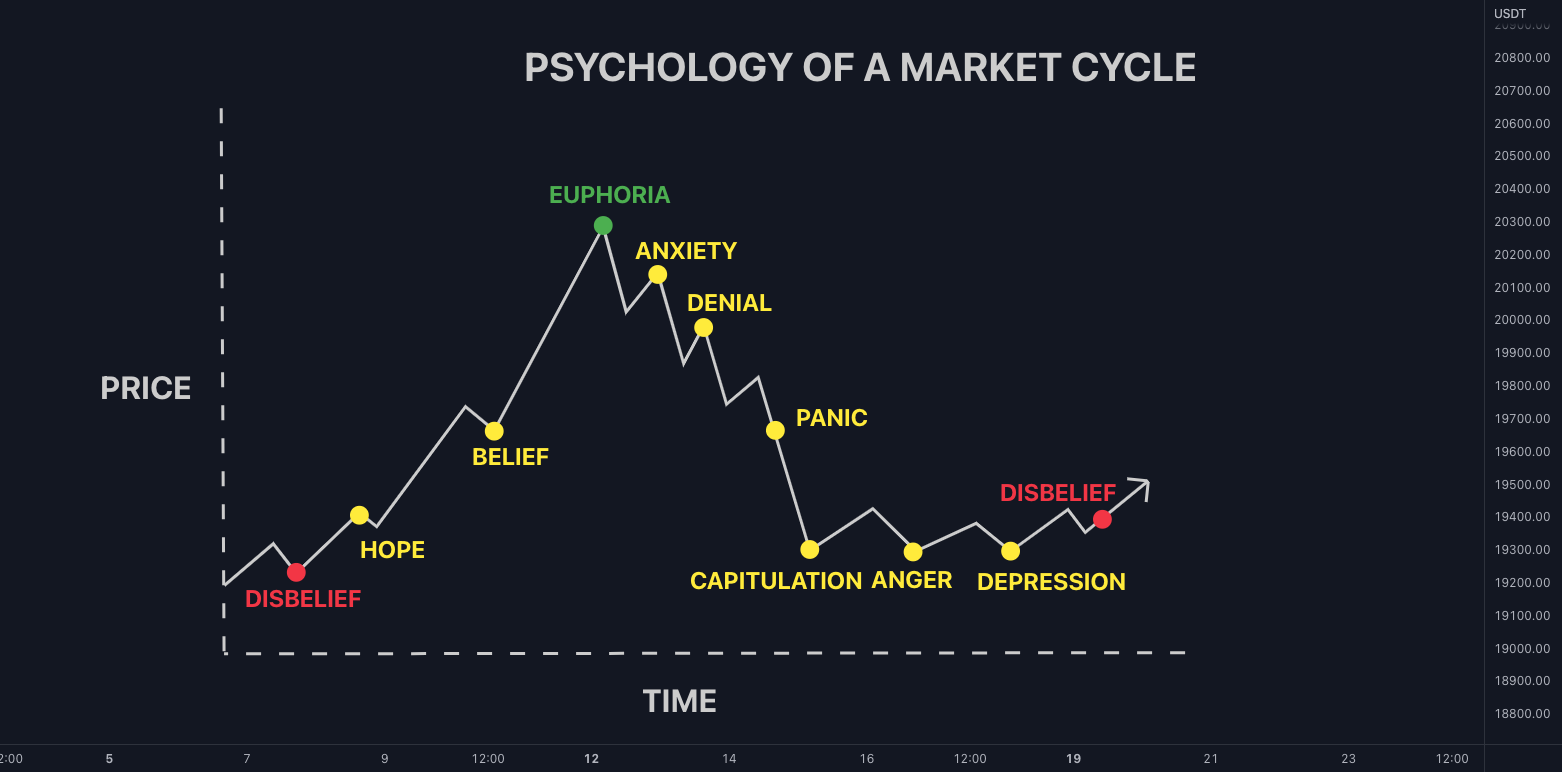
But flip that on its head: markets run on belief, not truth.
They are Narrative Engines, spinning stories that convince people to keep pouring in cash. Stocks don’t climb because companies are becoming more productive; they climb because the liquidity hose is on and someone is buying the story.
Index funds? They are just a lifeboat. They keep you afloat as asset prices rise, but they don’t build the ship.
And that’s the trap: you don’t really own anything. Sure, you’ve got a green number on your screen, maybe a dividend or two, but you’re not sitting in the boardroom. You are just betting that the narrative holds up long enough for you to cash out.
The Mechanical Ponzi
A Ponzi scheme isn’t always a crime. Sometimes, it’s just a structural reality.
The market is a game of musical chairs where the music is money printing and the chairs are real assets. When the music stops, you don’t want to be the one standing there holding a number on a screen.
Tech stocks, Bitcoin, even real estate – the logic is the same. The system hums along as long as the story stays compelling and the cash keeps flowing.
But that flow relies on infinite growth in a finite world.
Wealth inequality is the ticking bomb. Everyone feels richer on paper, but real assets – land, gold, the tangible stuff – are scarce. The elite are already cashing out, swapping digital dollars for hard earth before the reset hits (e.g. Zuckerberg’s Hawaii compound).
History is clear: every few generations, the system groans. Currencies reboot, assets get confiscated, and the losers are the ones holding worthless numbers on a screen while the grocery store shelves sit empty.
The Cynical Participant
Seeing the system as a fragile confidence game leaves me grappling with what’s next.
Going full hermit with a bunker full of gold isn’t my style – or practical. Instead, I’m rethinking what wealth means. It’s relative positioning.
Index funds are the new savings account. Everyone feels richer, but if we all invest the same way, no one is getting ahead. Notional wealth is a mirage; relative wealth is what counts.
If everyone’s portfolio is up 10x but a loaf of bread costs $50, am I rich? Nope. I’m just inflated.
I’ve stopped chasing fundamentals. P/E ratios, cash flows, DCF models – the financial equivalent of reading tea leaves, except the tea leaves went to business school.
The only analysis I care about right now: who’s buying the story? How long can the hype last?
It’s cynical, but it feels truer than any DCF model I’ve ever seen. After all, the financial world is downstream from civilization itself, and the very basis of society is belief.
[Update, September 2026: the point stands – the story still moves the price. What changed is the plumbing under it. Every position I hold now carries a written kill line made of primary numbers – an EBITDA margin, a convert premium, a circular-financing threshold – and I read those numbers as tripwires, not tea leaves. They don’t tell me what a company is worth. They tell me when the story has stopped being true.]
Why I’m Still Playing
I just spent 600 words telling you the market is a confidence game. And yet, I’m still in it. Not broad index funds (too passive, too slow), but concentrated tech bets and a Nasdaq-100 position I treat like a volatile savings account.
Am I a hypocrite? Maybe. But I prefer to think of it as strategic cynicism.
Knowing the game is a game doesn’t mean you stop playing. It means you play differently.
I never confuse the screen for reality. A green number is not wealth. Wealth is what I can convert to real goods, real experiences, real optionality. Periodically, I ask myself: “If I cashed out today, what could I actually do with this?”
I concentrate rather than diversify. If the whole system is a confidence game, diversification just means betting on all the narratives equally. I’d rather pick the narratives I understand best – tech, AI, platforms – and ride them harder.
Every position I hold has an exit thesis, not just an entry thesis. Not a price target – a narrative target. When the story changes, I change. We’re not married to positions; we’re dating them.
And I keep some chips off the table. Not in a bunker-and-gold way, but in a “liquidity is optionality” way. Cash isn’t trash when the game is musical chairs.
Does this make me complicit in the Ponzi? Absolutely.
But complicity with clear eyes beats faith with closed ones.
Check out the financial companion piece to this essay: ⬇️

Plus, the framework for evaluating what wealth actually means: ⬇️

The concentrated betting that follows from narrative-driven investing: ⬇️

And, if you’re feeling brave, the disclosed uncertainty companion piece: ⬇️

More on the midwit trap in investing: Don’t Mid-Curve It ⬇️

Frequently Asked Questions
Are index funds a Ponzi scheme?
Not in the legal sense. Nobody’s committing fraud. But the mechanics rhyme. Index funds work as long as new money keeps flowing in and asset prices keep rising. If inflows stop or reverse – because of demographics, a crisis, or a shift in sentiment – the structure that made everyone feel rich starts working in reverse. The argument isn’t that index funds are criminal. It’s that they depend on the same structural assumption as any Ponzi: continuous new participation.
What is the difference between notional wealth and relative wealth?
Notional wealth is the number on your screen. Relative wealth is what that number buys compared to everyone else. If every portfolio is up 10x but bread costs $50, you haven’t gained anything – you’ve just been inflated alongside everyone else. The distinction matters because index funds give everyone the same exposure. When everyone invests the same way, nobody gets ahead in real terms. It’s the financial equivalent of standing on tiptoes in a crowd.
What is narrative-driven investing?
Investing based on which stories are attracting capital rather than on traditional fundamentals like P/E ratios or discounted cash flow models. The thesis: markets are narrative engines, not truth machines. Prices move because people believe a story, and belief attracts the capital that can make the story come true. George Soros called this reflexivity – prices influence fundamentals, which influence prices. The practical question becomes: who’s buying the story, and how long can it last?
What is an exit thesis?
Most investors have an entry thesis – a reason they bought. An exit thesis is a pre-defined condition for selling, based not on a price target but on when the narrative changes. If you bought a stock because the AI buildout story was compelling, your exit isn’t “sell at $X.” It’s “sell when the story stops working.” The distinction forces you to monitor the reason you’re in a position, not just the number attached to it.
What is strategic cynicism in investing?
Participating in a system you know is structurally fragile, but doing so with clear eyes and specific rules. The article’s version: never confuse the screen for reality, concentrate rather than diversify, maintain an exit thesis for every position, and keep cash as optionality. It’s the opposite of both blind faith in markets and full withdrawal from them. You play the game, but you don’t believe the game is fair.
Hmmm... Does that mean you're faithless now? Time perhaps for a sauna at the log cabin to reflect...
Very interesting and insightful piece. I completely agree that what we are seeing today is a harbinger of a substantial change in the global economy coming down the road. However, I feel like this article is kind of "ahead of its time", as the change you are implying probably will take decades to actually materialize. The key sentence for me is this one:
"But that flow [of cash] can’t last forever."
That's the problem with today's economies: the strategy of the most potent governments is to keep printing money to finance their futures. So the million dollar question is ¿how long will it take until the house of cards crumbles?