

The Ghost in the Machine trilogy follows a cascade: Mind → Education → Work → Governance → Identity.
Part 1 explored what AI does to your Mind. ⬇️

Part 2 focuses on Education and Work – how credentials are losing relevance. ⬇️
TL;DR: Institutions built to measure competence are now measuring software. The collapse of credentials is the first domino in the great institutional cascade.
The Death of Assessment
My cousin teaches at a top university in Australia. Last year, he admitted something that wasn’t in the curriculum:
“Homework is theater. Every student aces their assignments. Then they fail the in-person exam. No more than 10% can replicate their AI-assisted brilliance in the classroom.”
The institution he works for can’t assess what’s real anymore.
He isn’t alone. Andrej Karpathy – one of the founding minds behind OpenAI and former AI director of Tesla’s Autopilot – recently diagnosed the same terminal illness.
Any task done without supervision is now worthless as a metric of skill. It’s just a test of who has the better subscription.
Assessment has to move in-person. Students should learn to use AI but prove they can function without it.
The Scaling Problem
Moving assessment in-class works for small seminars. You can’t proctor 500 students simultaneously. You can’t hire enough teaching assistants. You can’t redesign an entire system built on offloading evaluation to unsupervised homework.
The institutions that can afford this pivot are the elite ones – the Oxfords, the Stanfords. Everyone else keeps pretending homework means something because they have no other choice.
The result: education stratifies further. The wealthy get human-verified competence. Everyone else gets a diploma worth less every semester.
The Ritual We’re Still Performing
I still remember the silence during translation exams in the mid-2010s. Hundreds of us flipping through physical dictionaries to translate 250 words of Spanish while Google Translate processed the entire internet outside.
We were performing a ritual that had already died – pretending the walls could keep the future out.
Every adult giving advice right now is navigating by instruments that no longer work. We’re flying blind, but we can’t admit it to the kids looking to us for direction. The social contract that promised “study hard, get a degree, secure your future” is breaking in real-time, and there’s no new contract to replace it.
The strongest case against all of this: credentials have survived every prior collapse of their signal. Calculators were supposed to kill arithmetic, Wikipedia the essay – Google Translate was already running outside that exam hall a decade ago, and the diploma kept its value anyway. Goodhart has been eating assessment for a century and the universities are still standing. Even the cousin’s own story cuts both ways: the students who ace the homework and fail the room are exactly the ones the in-person exam is catching. That’s not a dead signal. That might be a signal doing its job.
The Pivot

Stop testing what students know. Start testing how they think.
The assignment isn’t: “Write an essay on WWII.”
It’s: “Use AI to generate three conflicting theories on the causes of WWII. Evaluate which is most convincing, identify the hallucinations, and defend your choice in class.”
Intelligence is on tap. Agency – the capacity to direct, evaluate, and verify it – is the only skill left.
We’re being demoted from author to editor – paid to recognize when AI is wrong.
When Education Collapses, Work Follows
The diploma used to be a signal. Now it’s noise. And when credentials fail, the economy finds a new currency: your attention.
For two decades, the Blue Link Internet ruled. Search engines gave you 10 links. You clicked. Publishers got ad revenue.
AI kills that model. The AI-generated answer doesn’t give you a menu; it gives you a meal. It digests complexity and serves a single, synthesized response. It cites sources, sure, but nobody clicks the footnotes. The traffic stops. Publisher revenue evaporates.
You stay exactly where the algorithm wants you: trapped in the loop, a ghost in the machine.
The New Model: Promoted Truth
The original transformer paper was titled “Attention is All You Need.” In the future economy, attention is the only thing being sold.
When the answer is always synthesized, the monetizable surface is the truth itself.
The worst-kept secret is that companies will pay AI labs to weave their products into synthesized answers. Not as ads – as truth. Imagine if Wikipedia entries were quietly ghostwritten by the companies they describe. Now make it invisible. That’s where we’re headed.
And because personalization demands it, the model needs your complete psychological profile.
Remember the AI companion from Part 1? That wasn’t just emotional atrophy. It was a business model. Your attention, your data, your inner world – all monetized to sell you a promoted truth.
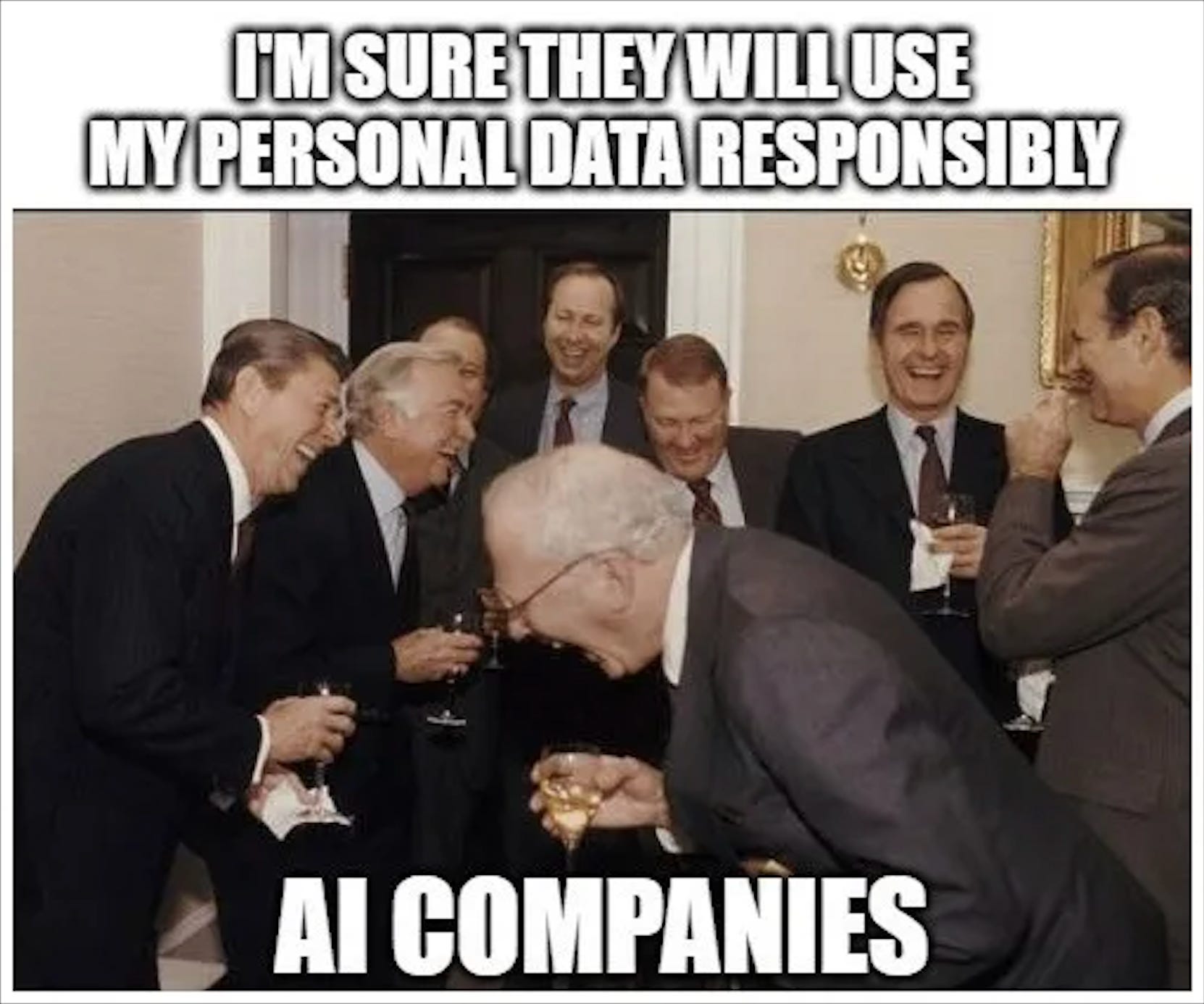
Your search history, your messages, your voice patterns, your emotional states – fuel for the machine that knows you better than you know yourself.
You’re not the customer. You’re the product and the consumer, wrapped into one monetizable loop.
Amplified by Displacement
As jobs automate, the attention economy explodes.
If your job involves a monitor and a keyboard, you’re in the splash zone. Displaced workers have time, and people with time consume content.

The job title “Prompt Engineer” started as a joke. By 2030, it might be the only job title. The economy doesn’t need you to produce – it needs you to direct production and consume the output.
We’re not automating work to free humans for higher pursuits. We’re automating work and keeping humans around to prompt. And scroll. And buy things that other prompts created.
While productivity gets automated, consumption becomes the only economic activity left.
We’re headed somewhere stranger than a society of empowered creators – a society of professional consumers, monetized by the millisecond.
Last year my girlfriend’s cousin asked me which degree was safe. She was deciding between graphic design and fashion. I gave her the reassuring answer – that it would be fine, that change takes longer than you think. I half believe it. The other half has seen the curves: exponential, while we go on reading them as straight lines. Was that wisdom I handed her, or just the most comfortable thing I had?

*BONUS*
You’ve made it this far. You’re in the mood. So here’s a digestif:
A deeper conversation on AI, employment, and what happens when the ladder disappears: