

TL;DR: “May you live in interesting times” is a curse disguised as a blessing. We responded to the curse by accelerating – more tech, more information, more speed. Wrong move. The real exit isn’t becoming smarter than the machines. It’s becoming more human than them.
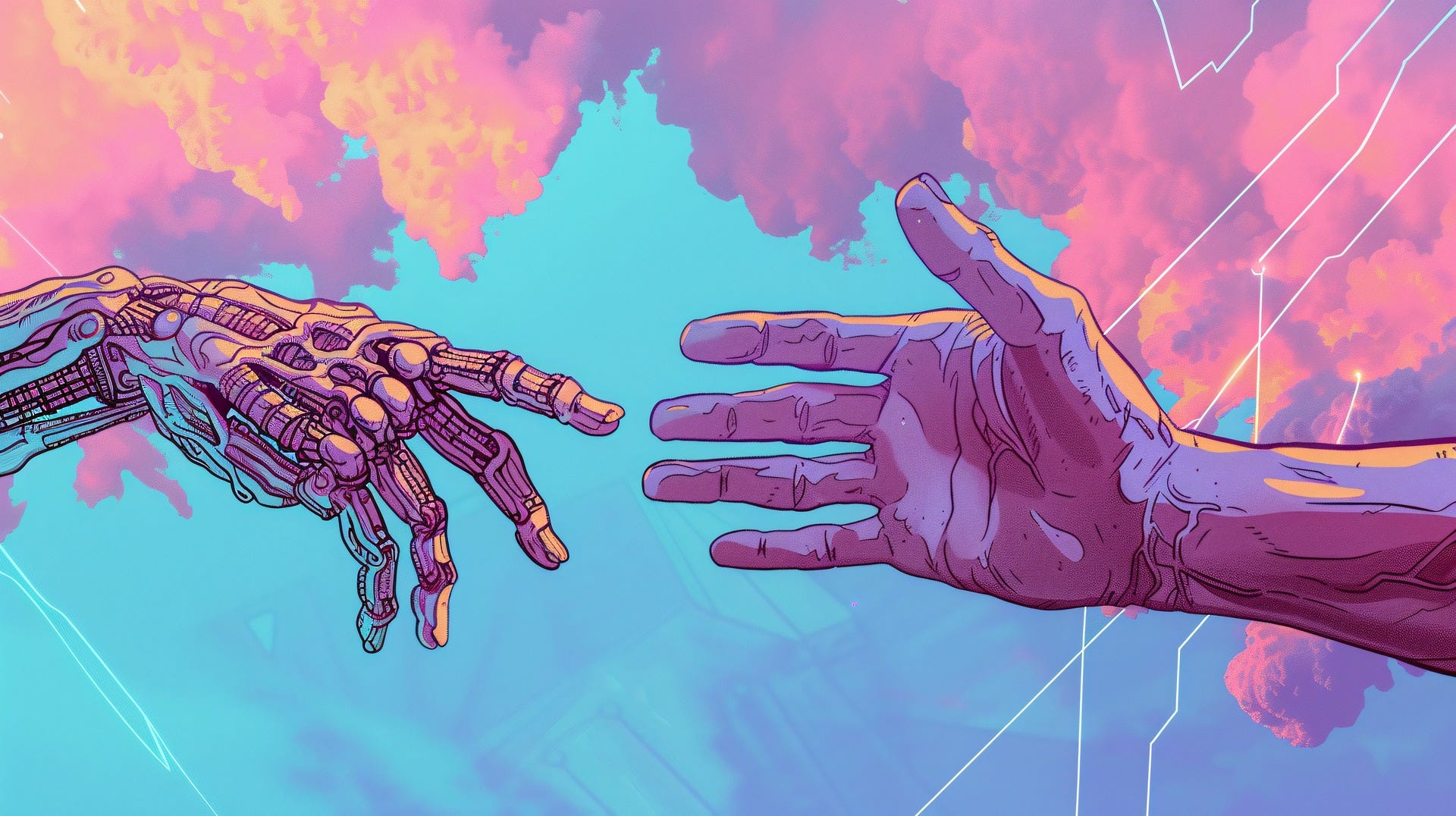
“May you live in interesting times.”
The phrase gets attributed to an ancient Chinese proverb. It’s almost certainly not Chinese, probably not ancient, and definitely a curse. The “blessing” is ironic – “interesting” means upheaval, crisis, the opposite of peace. A wish for chaos dressed as a compliment.
Congratulations. We hit the jackpot.
I’m writing this from a beach in the Philippines, which is exactly the kind of setting that makes “interesting times” feel like someone else’s problem. Paradise on one screen, apocalypse on the other.
Wars are back – a retro throwback nobody asked for. Inflation melts savings. The world order that held for 80 years is coming apart. And I’m watching all of it unfold on a device that tracks my anxiety for advertising purposes, between dips in water so clear it feels fake.
The Vacation from Survival
Technology has always been a vacation from survival.
Fire was cutting-edge once. The wheel was disruptive. Each breakthrough bought humans time – which we immediately spent building the next breakthrough.
I mean… just imagine explaining 1-day shipping to a caveman. “You mean the mammoth meat comes to you?”
For most of history, the project was simple: survive longer, suffer less, free up hours for something other than not dying. And it worked. We fly across the Atlantic in pressurized aluminum tubes and complain about the WiFi. The vacation got longer. The survival got easier.
But the curse kicks in.
We filled the vacation with a new kind of survival.
Homo Digitalis
Our phones are Philosopher’s Stones – turning attention into gold for tech giants. We’re evolving into Homo Digitalis, opposable thumbs permanently bent around rectangular slabs of glass, necks craned at angles that would concern any vertebrate.
Technology bought us freedom from physical survival. We used that freedom to build a digital survival mode that’s arguably worse – because at least the caveman knew what he was running from.
Are we masters of our devices, or Pavlovian dogs salivating at notification pings?
We’ve upgraded our software from Stone Age to Silicon Age. But we’re running it on Paleolithic hardware – brains optimized for scanning the savannah for lions, now scanning Twitter for outrage. Same stress response. Different predator. The lions at least had the decency to either eat you or leave.
The vacation from survival produced a species that can’t stop simulating survival. We doom-scroll through crises we can’t affect, optimize metrics that don’t matter, and mistake information consumption for understanding.
The “interesting times” aren’t interesting because the world got more dangerous. It’s always been dangerous. They’re interesting because we now experience all the danger, all the time, everywhere, on purpose – and call it staying informed.
Homo Sentiens
The question nobody’s asking at the right volume: if intelligence becomes a digitized commodity (and it will), what’s left?
Max Tegmark frames it cleanly: perhaps Homo Sapiens should stop trying to be Homo Sapiens and start becoming Homo Sentiens. Homo Sentiens is the idea that as intelligence becomes commoditized, humanity’s edge isn’t thinking – it’s experiencing. Not the wise ones. The feeling ones.
A machine can compose a symphony. It has never sat in silence after the last note wondering why it felt like grief. It can write a poem about loss. It has never lost anyone. It can optimize a portfolio. It has never stared at a red candle at 2am and questioned every decision that led to this moment.
In a world where AI can write, paint, compose, and analyze faster than any human, our competitive advantage isn’t processing power. It’s the thing that makes processing worth doing: the capacity to actually experience what we create. To find meaning where none was assigned. To watch a sunset in El Nido and feel something that no algorithm would waste compute on – because it’s not optimal. It’s just beautiful.
Technology gave us the vacation from survival. The question is whether we’ll use it to become more machine – faster, more optimized, more efficient at being anxious – or more human.
I know which side I’m betting on. Though, full disclosure, my track record with bets is mixed.
El Nido, August 2024.
The argument continues in Vol. 2:

For more on human vs. machine cognition:

PS: While you wait… here’s something to cheer you up when you feel overwhelmed:
Heretofore, that‘s brilliant! I am indeed expextant for the next episode.