

TL;DR: I spent two years “opting out.” Turns out you can’t actually leave. You can only choose which dependencies you accept.
The woman at the Jobcenter asked me to describe my current occupation.
I said I was a writer/investor at the intersection of AI technology, civilizational transition, the end of work as we know it, long-term capital allocation, and the question of whether capitalism will survive once scarcity stops being the organizing principle.
She typed “arbeitslos” and moved to the next field.
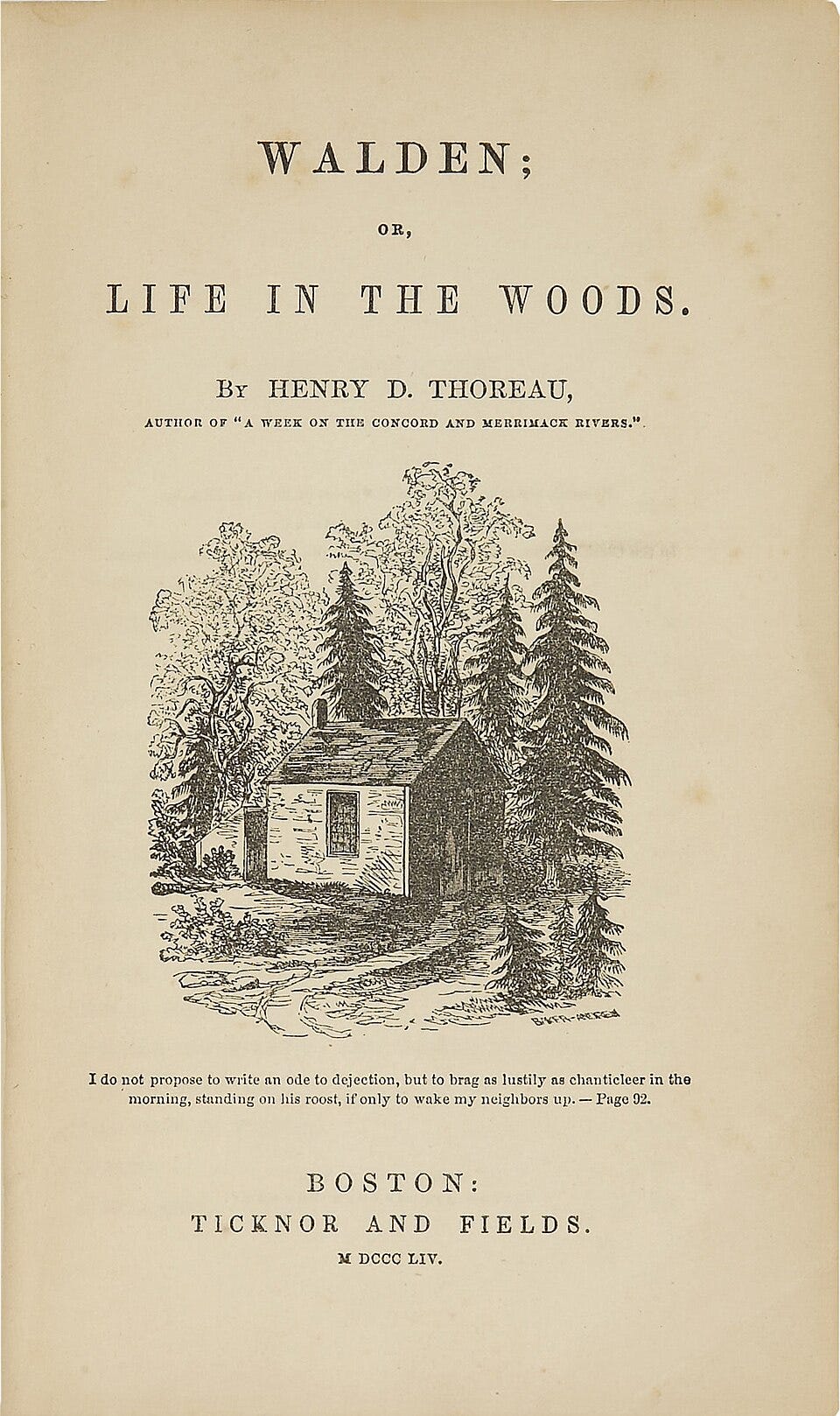
In 1845, Henry David Thoreau built a cabin by Walden Pond and wrote the book on opting out. The blueprint for everyone who’s ever wanted to escape the grind and “live deliberately.”
Except, the story goes, his mom did his laundry. The cabin was two kilometers from town.
The patron saint of deliberate living never actually left – he just renegotiated his distance from the systems he claimed to reject.
The Remove Button
I sold everything, traveled for two years, got engaged, and came back to filing paperwork and attending mandatory appointments. The specifics of my escape were modern – backpack, laptop, brokerage account – but the fantasy was the same one Thoreau had.
Remove yourself from the broken system. Live deliberately.
It’s seductive.
The impulse isn’t wrong (the systems often are broken). The lie is the word “remove.” You can’t remove yourself. You can only reconfigure your dependencies.
The Industrial Revolution replaced physical labor. Thoreau watched craftsmen become factory workers – human bodies interchangeable with machines. His response: retreat to essentials, prove that a person is more than their productive output.
Thoreau was saying: “I’m more than a pair of hands.”
Now the Intelligence Revolution is replacing cognitive labor. Knowledge workers are becoming interchangeable with models. And the response sounds familiar: retreat to... what, exactly? Authenticity? Taste? Whatever it is that a model can’t fake?
We’re saying: “I’m more than a pair of neurons.”
The cabin in the woods is always a response to the same question: if the thing I do can be done without me, what am I for?
The Dependency Trade
You don’t escape dependencies. You renegotiate the terms.
I traded employer dependency for platform dependency. Steady salary for investment volatility. I swapped corporate bureaucracy for state bureaucracy. Career legibility for explaining what I “do” at every dinner party.
And somewhere in the middle of all that opting out, I proposed.
The most deliberate thing I did during my experiment in deliberate living was choosing a dependency I’d never want to renegotiate.
Time sovereignty turned out to be real – the income holds (knocks on wood). German bureaucracy is annoying but functional. Explaining myself to confused relatives allegedly builds character.
Benefits run out in July.
The question I’m asking now isn’t “How do I escape?” but rather “Which dependencies am I willing to accept, and on what terms?”
Coming Back With Something
Thoreau’s experiment lasted two years. Then, he left the cabin and moved back to town. He spent the next seven years writing and rewriting until Walden was ready.
The glamorous part was brief. The real work came after.
Perhaps I’m at the end of my cabin phase. I’m betting that the skills I developed there – writing, synthesis, understanding AI, and navigating markets – will outweigh the career capital I didn’t accumulate.
If I’m wrong, I’ll have spent my early thirties building an audience of a few hundred and explaining a massive CV gap as “independent research.”
Then again, if I’m right, there won’t be a job to go back to.


Thoreau didn’t matter because he lived in a cabin. He mattered because he came back with something.
I keep telling myself that. It might be true. But it might also be a comfortable delay dressed up with good justifications.
I’m not sure if I’m in the rewriting phase or the stalling phase. The two phases look identical from the inside.
Related reading:
The Race Condition – the macro bet behind the cabin fantasy
The Job of the Future – what’s left when machines do everything
Got Thumos? – the spiritedness that makes people build (or flee)
Welcome back to the fold, my dear 'arbeitlos' :-)