

Six workers once carried each pensioner. Nowadays? Barely two.
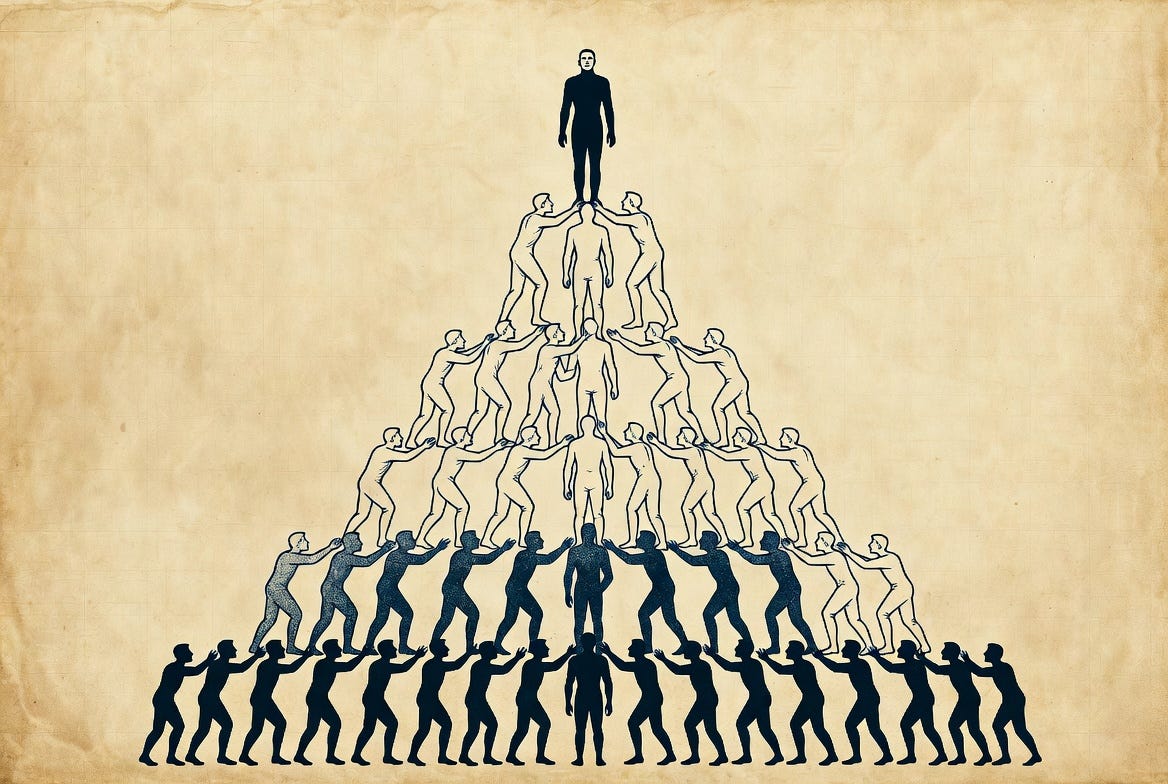
The pension was a brilliant deal, on one condition: that you died roughly on schedule.
You work, you pay in, and when you’re old and worn out, the next batch of workers carries you through the short stretch you have left. The short stretch was the whole design. It only balances if “retired” means “nearly done,” not a second adulthood.
It isn’t a short stretch anymore. People now retire into two decades and change of grandkids and decent knees, and a formula built for a five-year goodbye is being asked to fund a twenty-year encore. When the contract was drawn up, six workers stood behind each pensioner; across much of Europe it’s now under two, sliding toward one and a half. The sum stopped adding up somewhere in the back half of the last century, and nobody updated it.
Why nobody updated it is the tell.
Fixing the math means telling the people currently being carried that they’ll be carried a little less. Those people vote. They vote at the highest rate of any age group, in growing numbers, in defense of the one large transfer that flows toward them. The people on the other side of the ledger, funding a deal they’ll grow too old to want reformed, are fewer at the polls and busy with their lives. Broken math can be fixed. Guarded math can’t.
Still, pay-as-you-go is the only pension design that survived the twentieth century. Funded schemes were wiped out twice – hyperinflation ate the savers’ capital, war finished the rest – while the unfunded contract kept paying, because it runs on people, not portfolios. A design that outlives two currency collapses has earned some respect. What expired is only its second assumption: that the workers keep arriving.
It never collapses, the way a pyramid scheme is supposed to. It just keeps recruiting. Today’s payers complain about the arrangement right up until the morning they qualify for it, and then they reach for the same shield the last lot was holding.
Nobody is eating the young. The young are simply waiting their turn to be fed, and they’ll vote exactly like everyone before them once they get there.
The contract has one design requirement: never run out of people too young to stop it.
Related: Boomerlandia – what the arithmetic does to a country.

Sources: Demografie-Portal, contributors per pensioner · Eurostat EUROPOP2025 · OECD Pensions at a Glance 2025
like a drug: “Today’s payers complain about the arrangement right up until the morning they qualify for it, and then they reach for the same shield the last lot was holding.” and it’s a ticking time bomb because the numbers are so out of whack