

TL;DR: Travel taught me the world has no perfect place. Now I’m learning how to stop looking for one.
Travel fucked my life up forever. And here’s how I’m thinking through it.
Travel was easy: Where are we going next? The return is complex: Who are we becoming here?
For twenty-four months, my life was fueled by novelty and motion. Now I’m in the digestion period, face illuminated by the blue light of my phone at 2 AM, scrolling real estate apps and wondering why no place feels right.
The road’s freedom clashes with the weight of putting down roots.
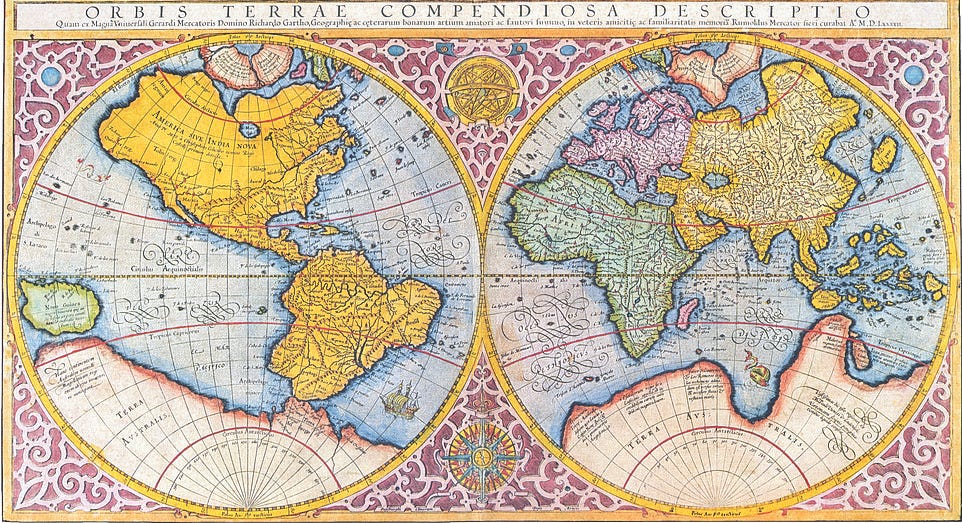
My purpose is paralyzed by perspective. It’s easier to explore the world than to claim your corner of it. The map is too vast, and every pin I place feels like a compromise.
Here are my new rules for redrawing a life that has seen too much of the map.1
I. The Perfect Place is Propaganda
The belief that I could collect the world’s best parts and fuse them into a perfect mosaic was a lie.
What good is a train that runs on time if you’re a Tokyo salaryman sleeping under your desk because you’re too scared to leave? What good is cheap living if you’re inhaling burnt plastic every afternoon? What good is the immaculate Byron Bay vibe, when you feel worlds away?2
The more coordinates you log, the more your internal map distorts. With a hundred points of comparison, every location on Earth falls short.
It’s the inflation of choice. I’m so rich in experience that I’m priced out of simple contentment.
The post-travel self doesn’t ask, “What does this place offer?” It asks, “What compromises must I accept to live here?”
The revelation: building a life is an act of elimination, not addition. I must identify which essential features I am willing to forfeit. That commitment to sacrifice is far harder than booking the next flight.
II. To Base Camp or not to Base Camp?
After two years of constant movement, the desire for rootedness is creeping in. Motion creates a deficit of stillness.
But that magnetic pull towards a settled lifestyle must be scrutinized: Is the longing for a “forever home” a legitimate need, or just the lingering echo of a sedentary script I already burned?
Our period of sustained wandering proved that we can be purposeful, productive, and loving without a fixed address.
The “forever home” is obsolete. Introducing a new model: the Base Camp.
A Base Camp is a temporary, optimized hub for your current life stage. It’s chosen for its utility right now, not permanent value. It’s a place to rest, reflect, and plan the next adventure – local or global. It isn’t an anchor. It’s a launchpad.
This reframes the entire decision. Why overpay for a shitbox apartment in a city I don’t need to be in?
City life, with its networking gravity and cultural density, demands a price I am no longer sure I want to pay. I’m tired of the high tempo, the constant distraction, and the hidden tax of climbing a visible social ladder. Been there, done that. Why go back?
My next Base Camp might be a fixer-upper rural home. Not because I’m running away, but because I’m re-pricing life itself.
This isn’t theoretical. I scouted Valencia for months – it came down to an apartment in Ruzafa or refurbishing an old “casa indiana” in the north of Spain. Cooler heads prevailed: I wasn’t ready to buy into the real estate boomer Ponzi scheme. (Just yet.)
The calculation has changed: I now value time, peace, and sovereignty over overpriced cocktails and networking opportunities. The downside is distance from friends – some call it social suicide. The upside is control over my own rhythm – nature, dog walks, a fire in the fireplace, and time to write.
By viewing roots as temporary, I maintain the lightness and agility of the nomadic self. After all, I’ve seen too much to trade freedom for stability again.
III. Charting New Coordinates
Here is the map of what I am eliminating: The belief that I need to be “where things are happening.” The FOMO that kept me tethered to expensive zip codes. The idea that a life well-lived must be witnessed by an audience to be valid.
And here is what I am fortifying: Uninterrupted time to think. The ability to say no without social consequence. A daily rhythm set by internal priorities, not external expectations. A space that feels like mine, even if the lease is short.
The new metric of value is time quality, intellectual spark, and the sovereignty to build what makes sense to me.
This is the recalibration that travel demanded but couldn’t complete. I couldn’t read the map while I was running. I had to stop, digest, and choose.
The Base Camp is being plotted somewhere quiet, with a dog’s tail wagging at pace, a fireplace, and reliable internet (hello Starlink) for when the world still needs reaching.
But I’m not pretending this is “the answer” – just the next experiment on a map that still has blank spaces.
This isn’t post-travel depression. It’s post-travel recalibration. There’s a difference.
Actually, that one sounds pretty fantastic.
A sober and provoking reflection that clears the path for a sound next-move in its due time.