


TL;DR: You can’t plan your way to serendipity. But you can shape the surface area where it lands. Luck has a formula, and every platform you use daily is working to shrink one variable to zero.
We were dogsitting a Rottweiler named Juno in suburban Brisbane. I’d baked scones because the flour package had a recipe on the back and there were chocolate chips in the pantry. I made enough for 20 people.
TMT (my then-girlfriend, now fiancée, for the uninitiated) walked the scone surplus next door – the neighbor, Greg, had been mowing parts of our lawn unprompted, because Australians are like that. She came back five minutes later: “Julián, we’re invited for dinner. At their house. In 30 minutes.”
Their dinner guests had cancelled last-minute. The food was already prepped. Greg’s wife was Chinese; they’d met in Hong Kong where he’d worked in finance – and the house confirmed it. Pool. Porsche. The works. Their son was visiting. He’d made 48-hour braised pork with apple-mango sauce. Three courses. The kind of meal that makes you look down at your chocolate chip scones and reconsider your entire contribution to society. Anyway… we showed up and left with a second dinner invitation.
No planning would have produced any of it.
In 2010, Jason Roberts coined a term that stuck: Luck Surface Area.
His formula: L = D × T
Luck equals Doing times Telling.
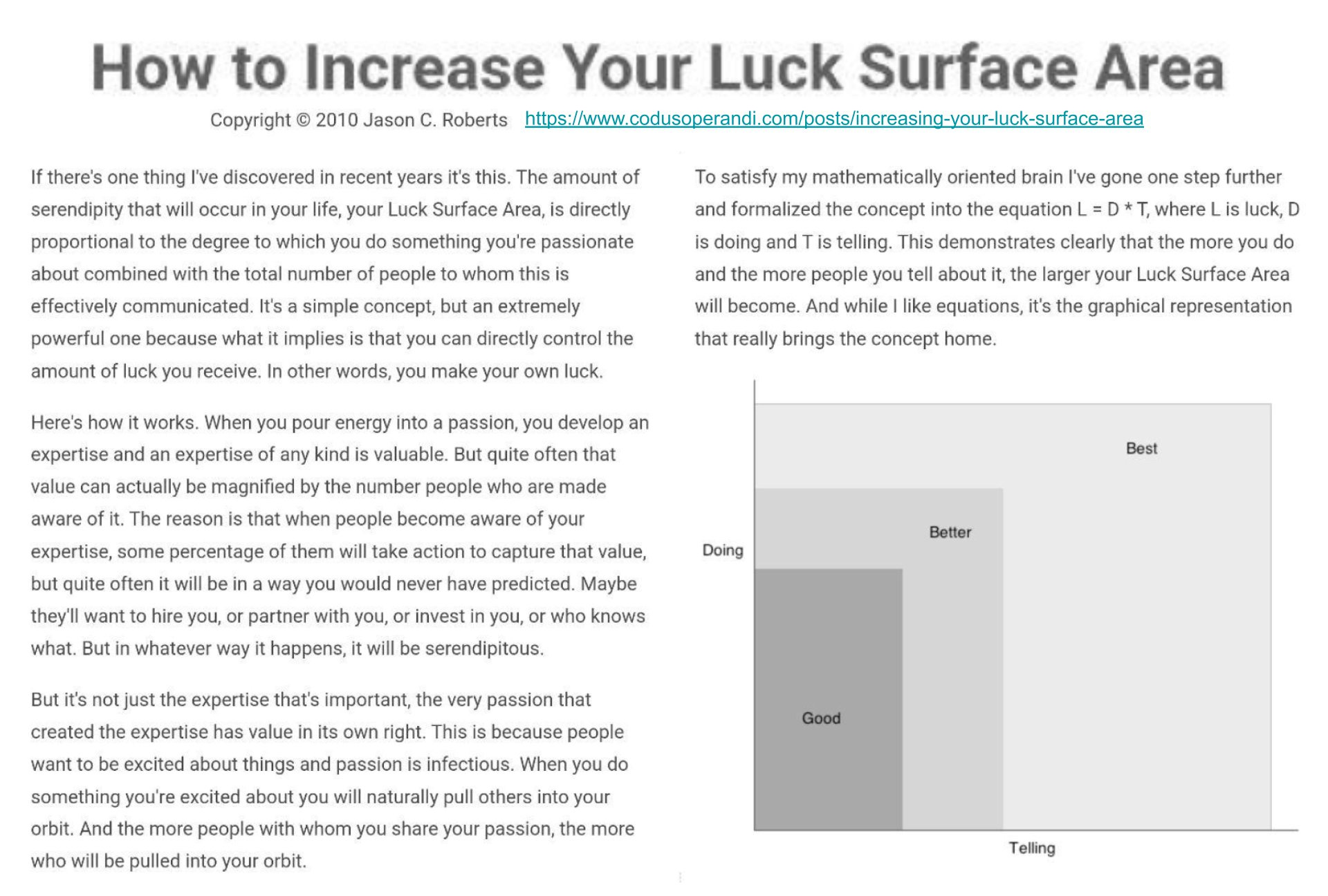
Build something and make sure people know about it. That’s it.
Some percentage of those people will take action you never predicted – hire you, fund you, introduce you to someone who changes everything. The mechanism is serendipitous. The conditions that enable it are not.
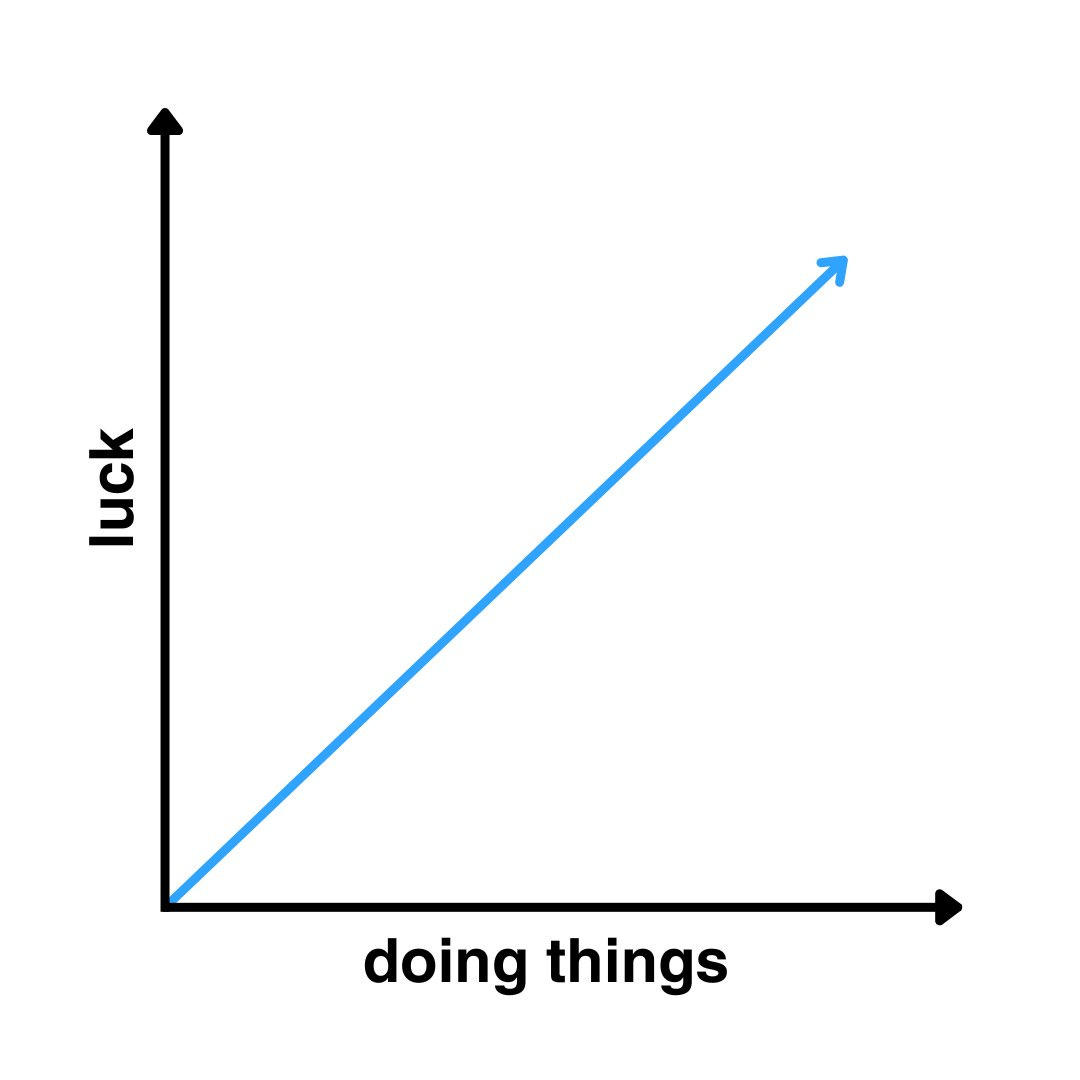
But Roberts’ formula is missing a variable.
The Shape Problem
D × T gives you the size of your luck surface area. It doesn’t say anything about the shape.
Two people, both high on Doing, both high on Telling. One does the same things in the same places with the same people, month after month. The other keeps moving – geographically, intellectually, socially.
The first person’s luck surface area is a narrow rectangle. The second person’s is a wide square. Same area. Radically different exposure.
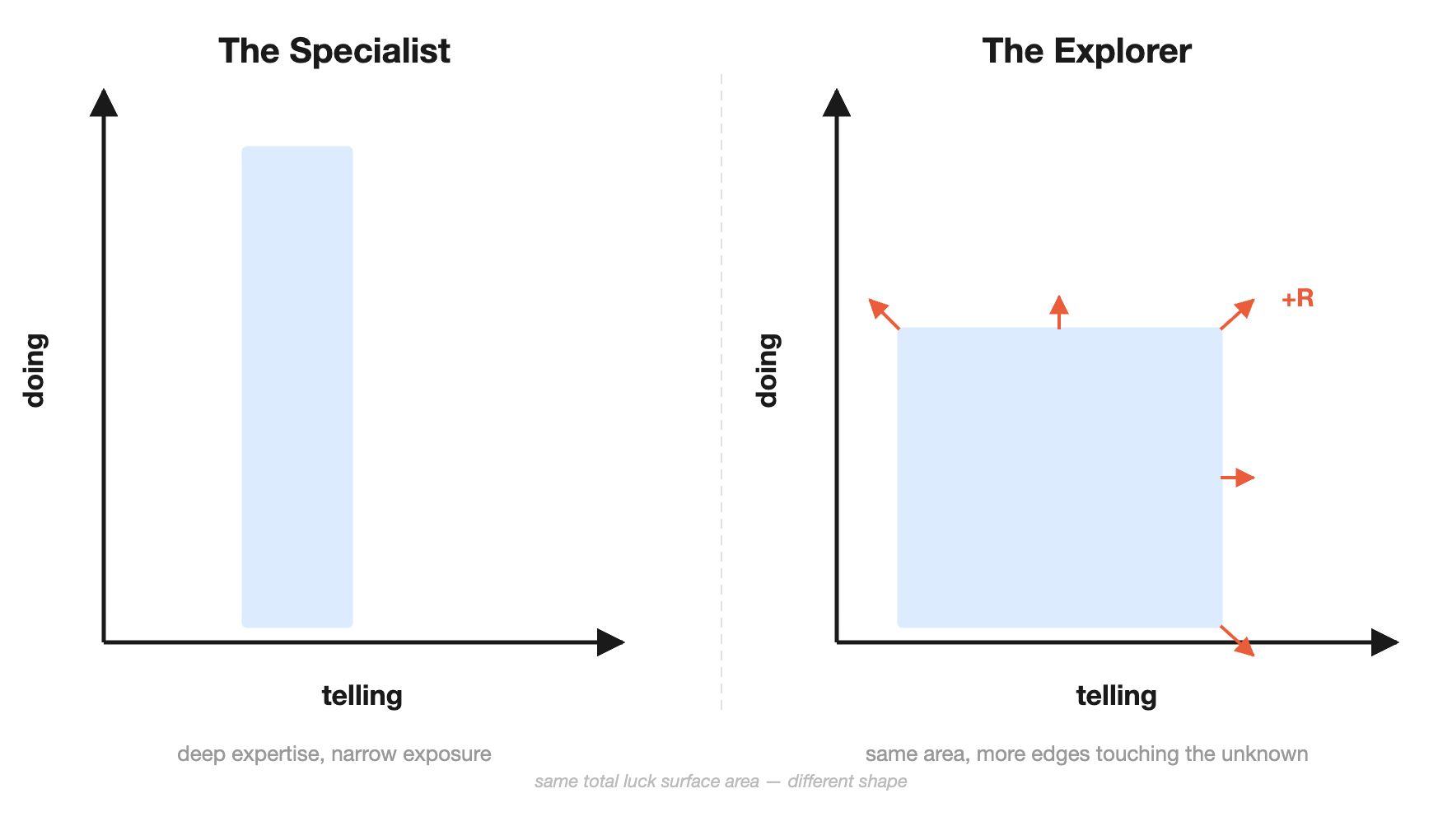
Roberts’ formula needs a third variable: R
For randomness exposure – the degree to which you put yourself in situations your past behavior can’t predict.
L = D × T × R
The Compression Machine
Every platform you use daily is working to shrink R to zero.
Your feed shows you what you already like. Recommendations reinforce what you already know. The social graph calculates who you already agree with. Spotify gives you “Discover Weekly,” which is really “Confirm Weekly.”
The attention economy is a randomness-elimination engine. Its job is to reduce surprise, increase predictability, and keep you inside a behavioral corridor narrow enough to monetize.
The result: your luck surface area compresses into a line. Infinite depth, zero width. The world’s foremost expert in your own echo chamber.
The algorithm can give you relevance. It can’t give you surprise.
The Settling Paradox
Two years of nomad living taught me this: travel is a brute-force R multiplier. The scone story wasn’t unusual. It was Cheeeewwsday (Tuesday for the uninitiated).
Two years will soon turn into three. I’m getting married this summer – and then we’re fucking off to Australia by the end of the year. No city picked. No car. No dog (yet). The backpack stays.
The conventional sequence says: marry, settle, build. But that treats R as something you graduate from, when really it’s a variable you manage. The nomad life caps D – your context resets every few weeks. Settling caps R – your context calcifies.
The question isn’t which one wins. It’s how long you can run both variables high before physics intervenes.
For me right now, that means refusing the false binary. Getting married without picking a postcode. Writing publicly to people I’ll never meet instead of journaling privately. Picking up the phone when the conversation could just be a text. Saying yes to the dinner invitation even when I’d rather stay in. Especially when I’d rather stay in.
Randomness maintenance as a lifestyle, not a strategy.
The Shape of Luck
Roberts was right. Doing and Telling are the foundation. But shape matters as much as size.
The algorithm wants to give you a line: efficient, predictable, monetizable.
Luck doesn’t live on lines.
When Juno’s owners came home, we told them about Greg – the dinners, the wine, the braised pork, the whole thing.
Her response: “Greg? The house to our right? They’ve never had us over for dinner.”
She’d lived next door for years. We were there for a month.
Same neighborhood. Same proximity. Different surface area.
Settling down? What? Have you asked that fiancée of yours? 🤡 No lo creo