

TL;DR: In 2024, I quit my job, traveled around the world, and bet my life savings on AI disruption. Now I wake up every day not knowing if I’m a genius or an idiot. So far, so good though...
There’s a terrifying concept in investing: being early looks identical to being wrong.
You see something the market hasn’t priced in yet. You make your bet. Then the market spends the next 18 months telling you you’re an idiot. Everyone else is making money doing the obvious thing while you hold onto a thesis that looks increasingly delusional.
Then one day, the market catches up. Stubborn contrarianism becomes ‘visionary.’ Wrong becomes early.
The problem is, most people who think they’re early are just wrong. And you can’t tell the difference until you check your bank account five years later.
I think about this a lot because I’m living it. In 2024, I quit my job. My girlfriend and I have been wandering crustaceans without a shell for two years. For what it’s worth, I’m funding it through investing and swing trading. My net worth has grown, not shrunk. And I have no plans to go back to traditional employment.
Friends see an early-30s crisis. Family asks about getting a “real job”.
I don’t know if I’m early or wrong. But I know why I left, and why I’m not going back yet.
Everything Is About to Change (Maybe)
What I believe – or at least what I’m betting on:
Within the next decade, AI will automate 80% of knowledge work.
Work will still exist. Even what I used to do: content management, copywriting, translation. There just won’t be rooms full of people doing it. You’ll still need humans as shapers and editors. But a team of ten becomes two. A department of fifty becomes fifteen.
Most of the roles at risk involve drafting, processing information, and routine reasoning, which AI agents can perform. (“Agentic AI” is where you ask your chatbot to go accomplish some task out on the open internet for you.)
I’ve watched this happen already in the 21 months since I left. Tools I would have killed for in 2023 are now standard. My former colleagues are doing with AI what used to require three additional people.
The layoffs have started. The “restructuring” emails are getting more frequent.
Going back to that world feels like climbing aboard the Titanic because the dining room looked nice.
So I made a different bet: own the shovel companies, learn things no chatbot can fake, and stay light enough to run.
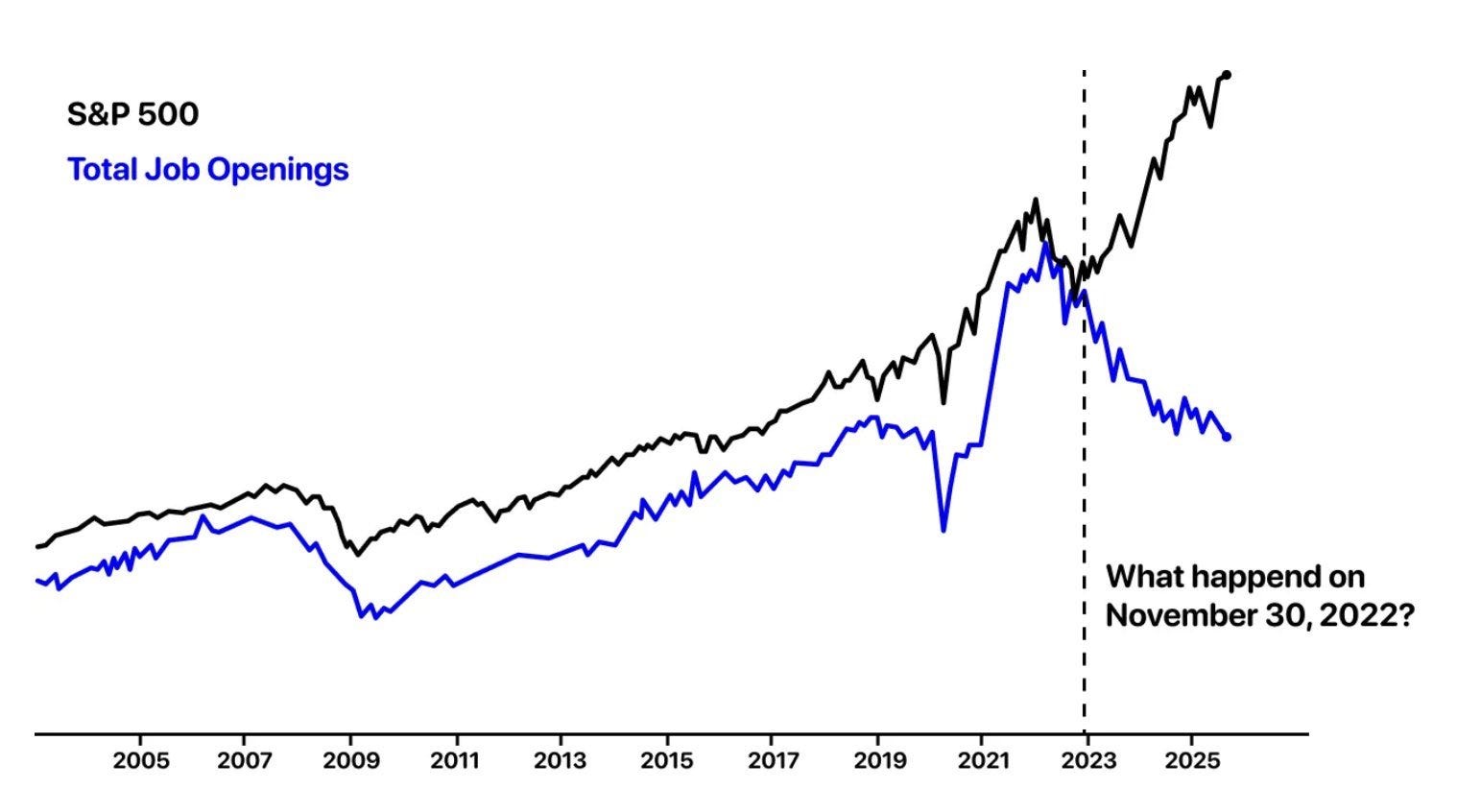
The data seems to support this. Since ChatGPT’s release in late 2022, the S&P 500 has surged to record highs while job openings have dropped back to 2021 levels. Companies are becoming more profitable with fewer people.
This is the gap no one talks about: the stock market and the job market don’t move together anymore. Corporate profits can rise while job security falls.
Amazon can cut 14,000 positions (reportedly up to 30,000) not because the business is failing, but because automation makes those roles redundant. For shareholders, this improves margins. For workers, it eliminates rungs on the ladder.
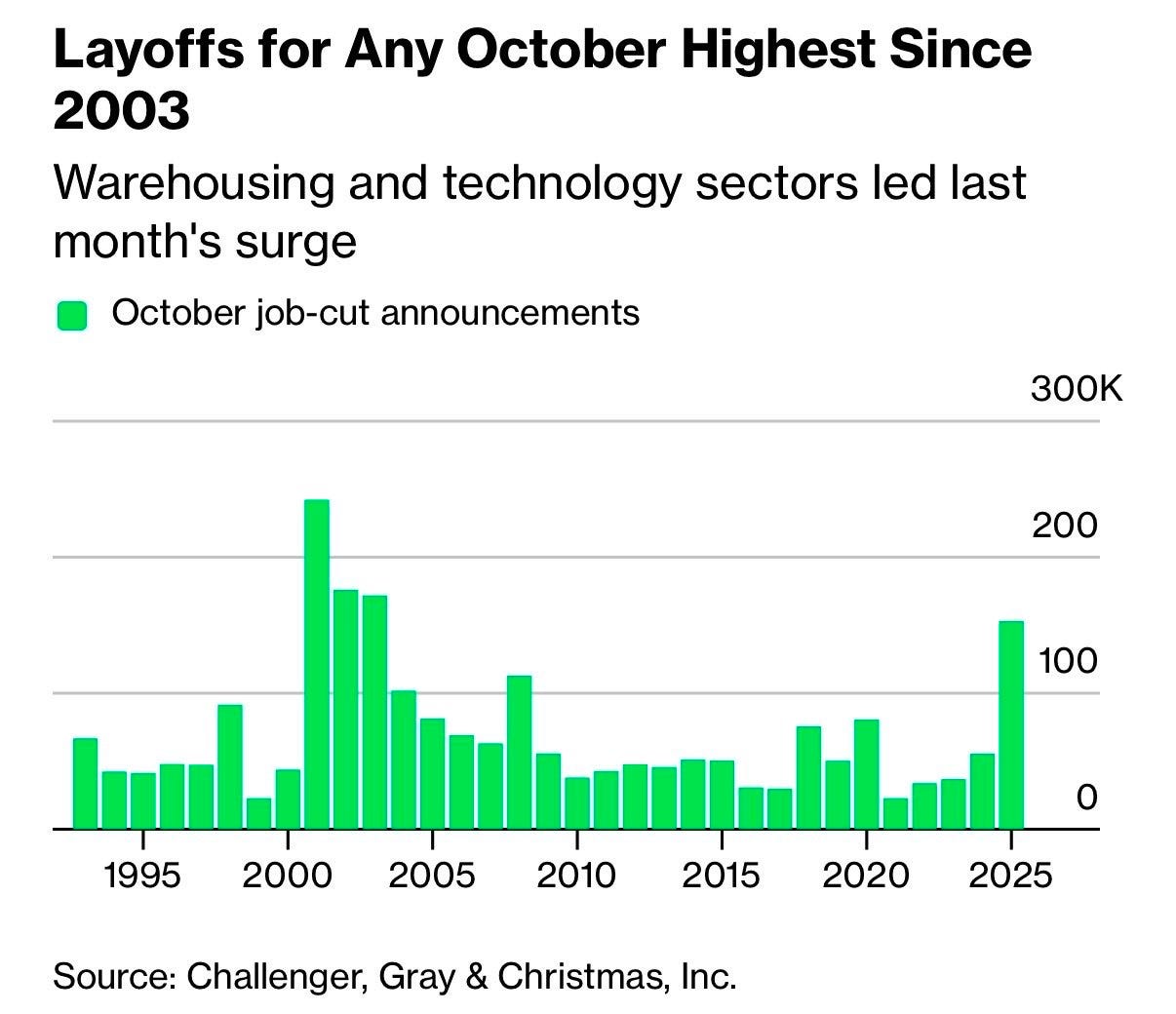
October 2025: Highest October layoffs in 22 years. 🔥 ©And Amazon isn’t alone. U.S. companies announced over 150,000 job cuts in October 2025 – the highest October since 2003, per Challenger. The sectors leading the cuts? Warehousing (robots) and technology (AI). This is an efficiency signal.
That’s why my bet is about being on the ownership side of that disruption rather than the labor side.
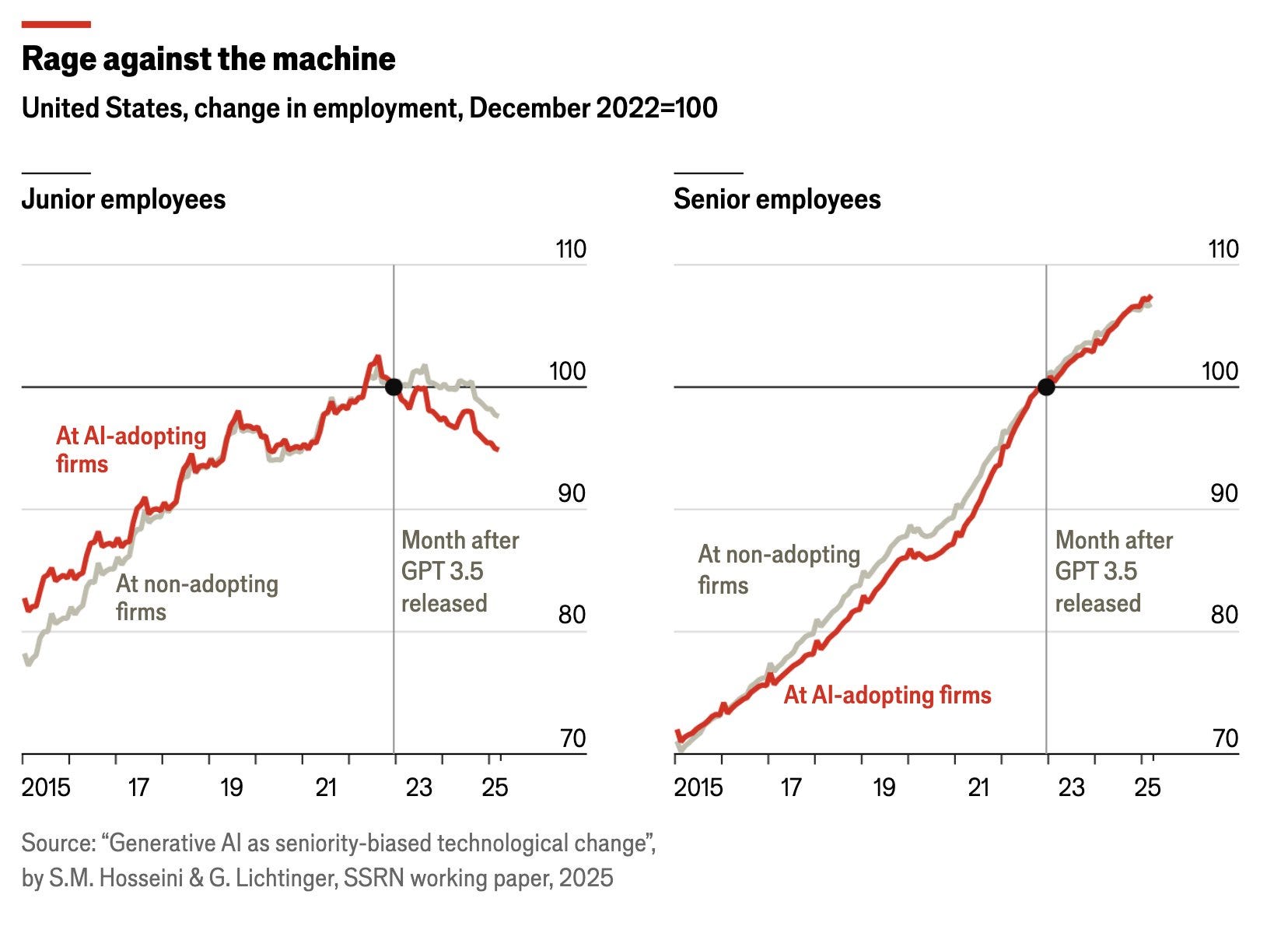
Companies are specifically cutting junior roles – the execution layer. At AI-adopting firms, senior employment keeps growing while junior hiring has flatlined. The ladder isn’t disappearing (yet); the bottom rungs are.
And the adoption curve isn’t slowing.
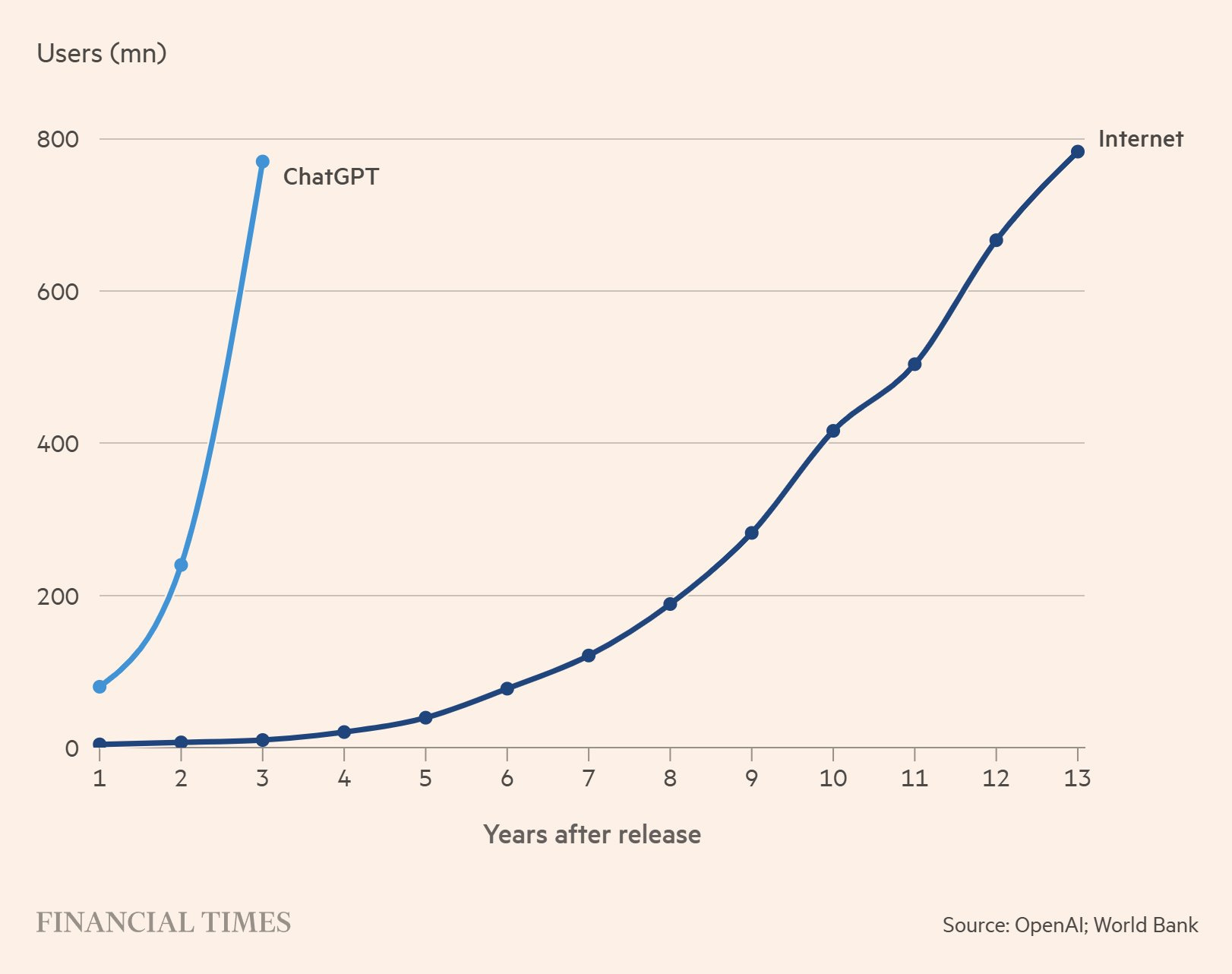
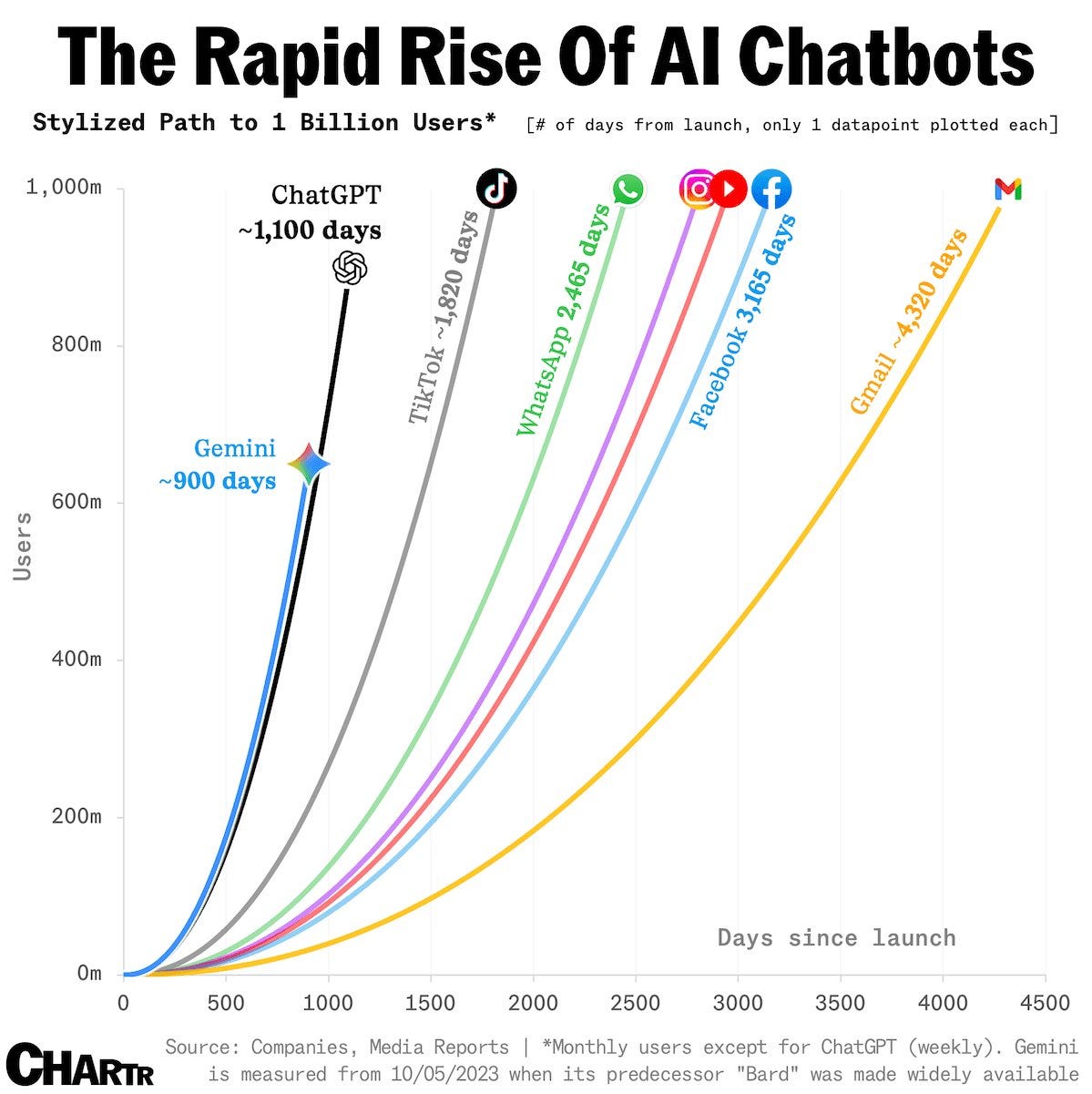
Even if the tech stagnates tomorrow, today’s models barely scratch the surface of wide-scale corporate implementation. Sure, there might be a bubble in AI valuations – but the job displacement is real regardless. The companies implementing this tech are getting leaner whether their stock prices are rational or not.
Correlation ≠ Causation
I could be betting on a correlation that isn’t causation. ChatGPT’s launch also overlaps with the Fed’s restrictive monetary policy, or tightening cycle, during which interest rates increased and money became more expensive. Though rates have come down recently and jobs have not rebounded.
So far, it’s working. The freedom is real. The quality of life is absurd.
But that doesn’t mean I’m right.
Being Early Is Lonely
The worst part is the social isolation of holding a contrarian position.
When a friend tells me about work, there’s a look. Not quite pity, not quite confusion. Something like concern. ‘That’s great you’re doing your thing, but... when are you coming back?’
Coming back to what, exactly? A career ladder that’s being sawed off at the bottom rungs?
But I can’t say that without sounding like a conspiracy theorist or, worse, someone rationalizing their own unemployment. So I smile, sip my drink, and say something vague like “I’m figuring it out” before asking about their kids.
LinkedIn is a parade of promotions I’m genuinely happy about and only slightly jealous of. Every “#blessed” post is a data point confirming the conventional path still works. For now. Probably. Maybe. They’re building networks, stacking credentials. I’m accumulating... what? Travel stories? Time to think?
There are nights when I wonder if I’m just the guy who got lucky, mistaking timing for skill. What if all this analysis is worthless? What if it’s only working because we’ve been in a raging bull market driven by rising global liquidity? The better explanation may well be: “A rising tide lifts all boats.”
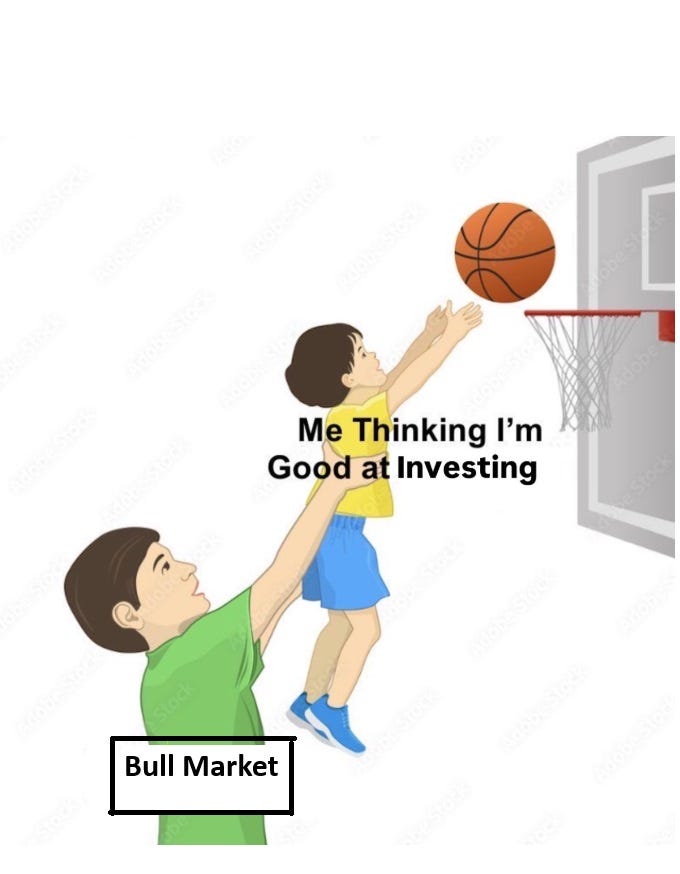
What if the AI transition takes thirty years instead of ten? What if I’m burning social capital I’ll desperately need later? What if I’m unemployable when I finally need a job?
What if this is elaborate cope? A framework to avoid admitting I’m scared of becoming redundant – so I’m choosing it on my own terms?
I don’t know.
But I also know this: the alternative – going back to a job I’m genuinely convinced will be gone – feels equally delusional. Maybe more so. The patient is terminal; the company is just waiting for the right quarter to pull the plug.
The Unfalsifiable Present
The problem with “early vs wrong” is that both narratives fit the current data perfectly.
If I’m right: I exited before the disruption accelerated, positioned myself in the benefiting asset class, avoided golden handcuffs, and developed location-independent skills while others locked into office-dependent careers.
If I’m wrong: I quit during a bull market and confused timing with insight. I’m burning prime earning years while peers compound equity, building an unexplainable resume gap, and I will crawl back older and less competitive after wasting the exact window when I should have been building conventional capital.
Both stories are internally coherent. Both are plausible. Only time will tell which one I’ve been living.
As of late 2025, the data supports my thesis. The models are improving faster than the optimists predicted. The automation is real. The job market is shifting.
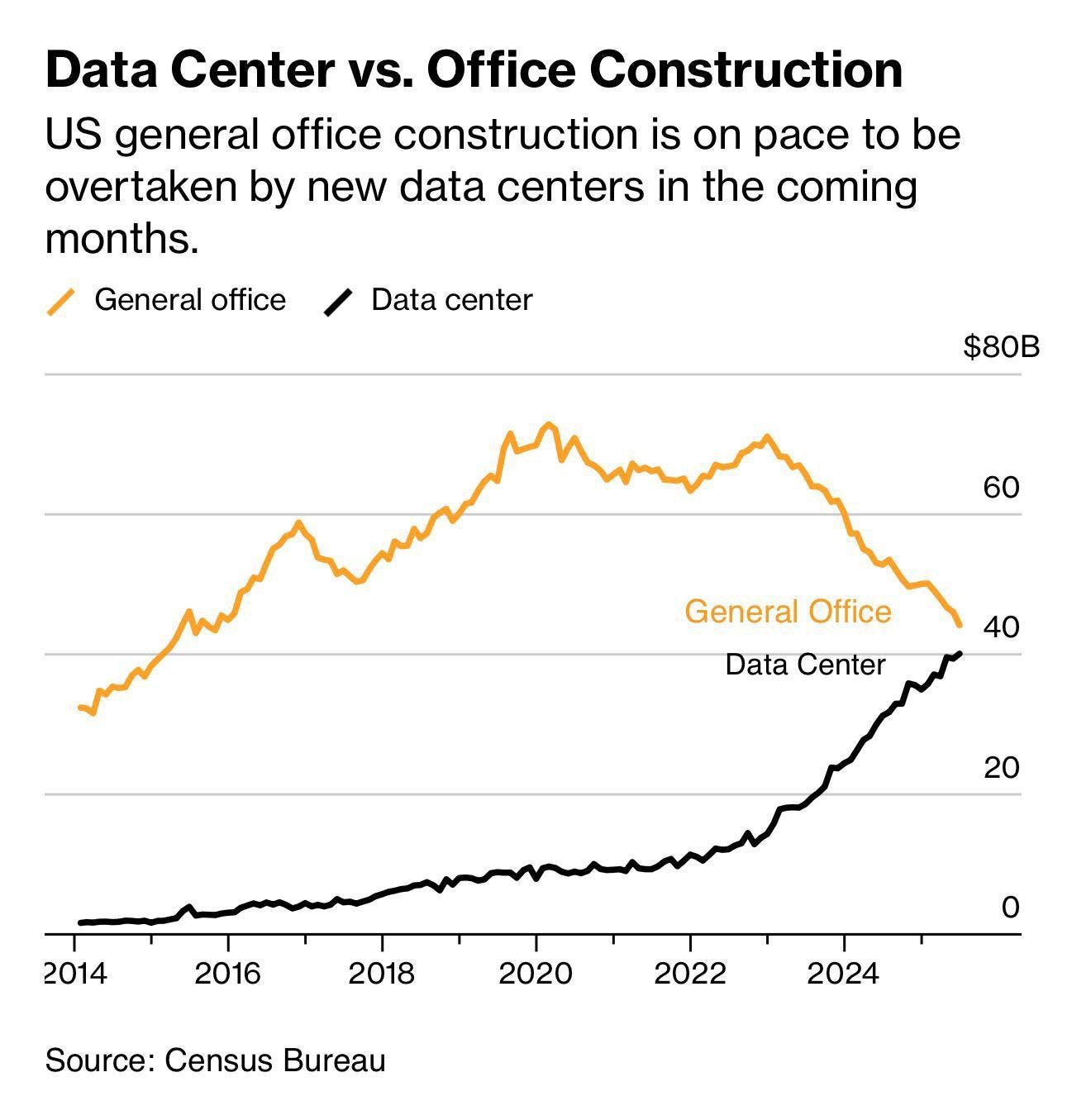
But that could just be confirmation bias. I’m looking for signs I’m early because the alternative – that I’m just wrong – is existential crisis-inducing.
If being wrong looks like waking up and following my curiosity, working when I’m sharp, and having conversations that don’t fit the nine-to-five template – where do I sign?
Ask Me Again in 2030
If I’m managing my personal hedge fund, still keeping “Inversor. Escritor. Vividor” (Investor. Writer. Life enjoyer) in my bio, I was early.
If I’m applying to jobs with a multi-year gap on my CV, desperately explaining why I’m still relevant, I was wrong.
Right now, I’m neither. I’m just a guy who made a bet, documented the reasoning, and is living with the consequences before knowing the outcome.
So: am I early, or am I wrong?
I’ll let you know when I find out.
you perfectly put into words (and action) what many are thinking (I suppose, anyway…) – excellent text laying out your thought process, investment thesis, and life choices. Here’s hoping we will have been right, ha! :)
I think this is my favorite article yet. In a few lines, you perfectly summarize the internal monologue (and struggle) that some of us "suffer". Even when you have clear signals to reach a conclusion, there are always counter-arguments, although not everybody is capable of seeing (and accepting) them.
By the way, you should befriend Michael Burry. I think he knows something about being early.