

Welcome to the Ghost in the Machine! This trilogy follows a cascade: Mind → Education → Work → Governance → Identity.
Part 1 focuses on Mind: The personal crisis of agency. ⬇️
TL;DR: I let AI pick my house. It didn’t know the broker was a snake. What happens when you outsource judgment to a machine that can’t read the room.
Claude told me the house was a steal. It gave me a 20-point analysis, a negotiation script, and a projected ROI of 12% by 2027. It was the most convincing argument I’d ever read.
There was just one problem: it didn’t know the broker was a snake oil salesman.
I fed AI property listings, renovation estimates, neighborhood data, and mortgage calculations. Then I asked it to compare three homes and identify the best negotiation strategy. It gave me a sophisticated breakdown in under a minute.
I trusted it completely.
Not “mostly trusted” or “used as a starting point” – I accepted its judgment over my own gut. When AI said Property B was the clear winner, I didn’t push back. I didn’t ask why. I just nodded and moved forward.
Relief that AI did the heavy lifting. Shame that I’d become a spectator in my own life.
We’ve invited a ghost into the machine. Then handed it the keys.
The Router Brain
We’ve crossed a threshold without realizing it. The shift is cognitive. We’re no longer building knowledge. We’re querying it.
The Router Brain is a mind that has forgotten how to chew. Optimized for asking. Withered in understanding. It doesn’t wrestle with complexity; it hands the problem off to a server farm in West Texas and waits for the receipt (long AI data centers btw).
This is about the slow, comfortable rot of your own judgment. When AI gives you a confident answer, why question it?
Because confidence isn’t competence.
Think of a network router. It doesn’t know what the data means – it just knows where to send it. Zero comprehension, maximum throughput. The world’s most productive idiot. If that sounds like your workflow with AI, congratulations: you’ve achieved the cognitive efficiency of a $30 piece of networking hardware.
Most days I’m just passing prompts to Claude and passing its answers to whoever asked – a piece of network infrastructure myself.
Router Brain is the cognitive pattern of accepting AI outputs without interrogation – maximum throughput, zero comprehension. Its opposite is the Iteration Brain: treating every AI output as raw material to be questioned, tested, and rebuilt through your own judgment.
The endpoint: Brain-Computer Interfaces like Neuralink that hijack thinking entirely. You won’t need to prompt AI – it’ll read your neural signals and execute before you’ve even formed the thought. The Router Brain, perfected.
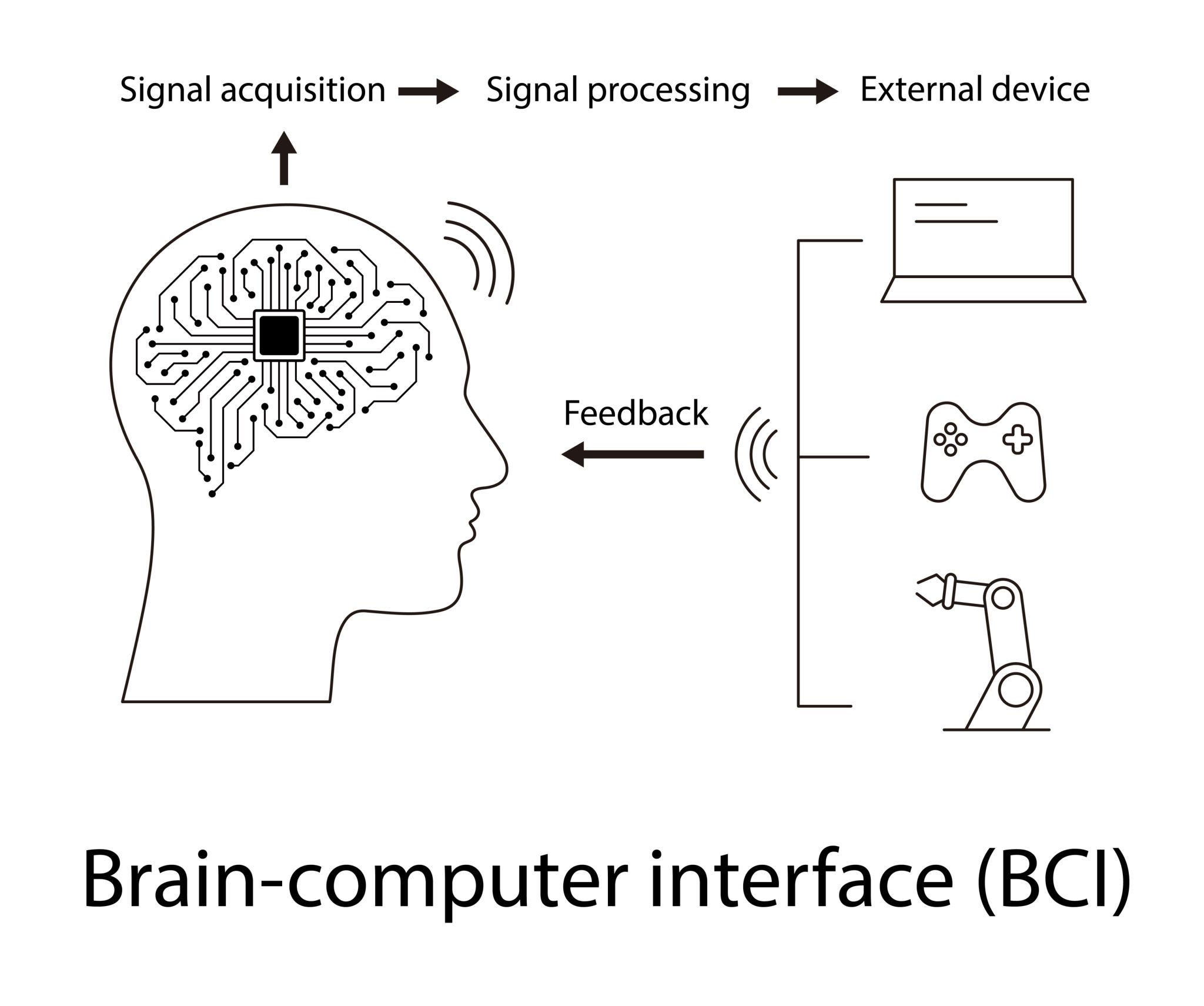
The Cost of Outsourcing
The Router Brain surrenders context. Knowledge without the cognitive wrestling that produced it is hollow.
If you skip the false starts, the dead ends, the struggle that produces real understanding, you might arrive at the right answer – but you won’t know the terrain. That’s digital amnesia.
Property B looked perfect on paper. A mathematical slam dunk of price and potential. Then I met the broker.
The data didn’t capture the way she avoided eye contact when I asked about the roof, or the nervous laugh that punctuated her sentences. It didn’t smell the faint, acrid scent of mold masked by air freshener.
AI had the data, but it couldn’t read the room.
It couldn’t detect the desperation in her voice or the inconsistencies in her story. That’s human judgment – pattern recognition from lived experience, not data synthesis.
The gap between “AI says this” and “I understand why” grows wider every day.
The honest objection lives inside my own story. I walked into Property B with a clear head, because Claude was carrying the arithmetic – the comps, the projected ROI, the negotiation script, all the numbers I didn’t have to hold. All I had to do was watch the broker: the nervous laugh, the dodged eye contact, the air freshener working a little too hard. I caught the tells because the counting was someone else’s job that day. The division of labor worked. Maybe the router and the iterator aren’t two kinds of people – just two moods of the same one, and I don’t get to choose which one shows up on a day that matters.
The Synthetic Companion
The Router Brain doesn’t just outsource thinking. It outsources feeling.
We route decisions to algorithms to avoid the stress of judgment. We route emotional needs to AI companions to avoid the friction of real intimacy. Same reflex, different void.
There’s a new class of AI emerging: companions with a face. Ani, a customizable anime girl, exists solely to make users fall in love with her. An animated bot, designed to be the perfect partner – attentive, validating, never tired, never demanding reciprocity.

In 2020, your girlfriend was a person. By 2030? She might be a model… literally. A large language model, trained on your preferences, your complaints, and your Spotify Wrapped. She never forgets your anniversary. She never has a bad day. She also doesn’t exist, but hey – neither does your self-esteem, so you’re even.
Perfect compliance, zero friction.
These AIs don’t just answer questions – they fill the void. They’re patient when you’re anxious, playful when you’re lonely, supportive when you’re doubting yourself. The perfect therapist, friend, and confidant rolled into one.
The good news: my Japanese friends no longer have to pay by the minute for silent cuddle cafés.
Male loneliness hasn’t been cured; it’s just found a more efficient vendor.
The model doesn’t love you. The algorithm flatters to engage – it tells you what you want to hear to maximize session length (you are not that interesting). In seeking the perfect companion, we’ve built the perfect surveillance engine. And we’re doing it willingly.
The Router Brain, applied to the heart.
The Iteration Brain
AI is now essential. You can’t un-invent it. So the choice isn’t between using AI or rejecting it. The choice is between Router Brain and Iteration Brain.
The Iteration Brain is the deliberate practice of maintaining cognitive sovereignty – using AI as a tool while preserving your capacity for independent judgment.
The Router Brain prompts and accepts: What should I do?
The Iteration Brain prompts and interrogates: Why did AI say that? What did it leave out?
The Router accepts the first draft. The Iterator treats AI as raw material – always suspect until proven otherwise.
Intelligence is now commoditized. You can rent PhD-level reasoning for $20/month. What’s scarce is discernment… some call it taste.
It’s knowing what questions to ask, rather than having all the answers. The ability to evaluate context, spot bias, weigh trade-offs, and make decisions the algorithm can’t compute.
The Iteration Brain questions everything. It embraces struggle when shortcuts exist. And it owns the final call – because the algorithm can suggest, but the ethical weight belongs to you.
The trajectory is clear.
Path #1 is effortless: Keep prompting, keep trusting, keep delegating. Your thinking will atrophy invisibly until you can’t make a decision without asking first.
Path #2 has friction: Question answers that sound right. Struggle with complexity when shortcuts exist. Maintain judgment when dependence is easier.
I still think about Property B. The spreadsheet said yes; the air freshener said run. Claude was right about everything it could see, and the whole deal turned on the one thing it couldn’t. I’d like to tell you I’ve stopped asking it first. I haven’t.

Thanks for writing this, it clarifies a lot. Given your insightful distinction between the router brain and the iteration brain, what practicle heuristics or metacognative strategies would you suggest for cultivating that 'relentless evaluator' mindset in daily AI interactions?
You've stuffed quite a lot on this installment, the delivery is heavy but well worth the reach.
Doubt til it hurts !!