


TL;DR: I’ve spent two years searching for greener pastures. Turns out, most of the planet fails a formula I didn’t expect. The jig is up in July. Time to pick.
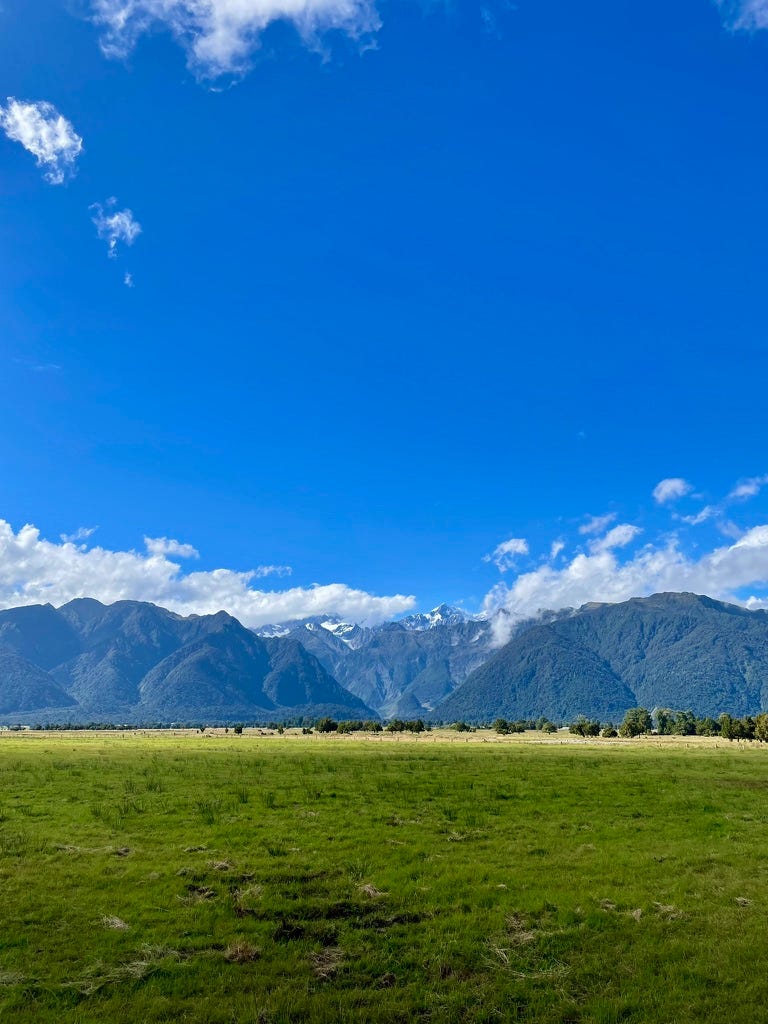
I don’t want to retire somewhere pleasant. I want to build.
The jig will be up in July. Two years on the road and one question left: where do you plant a flag when carry-on luggage stops being a personality?
“The grass is always greener,” people say, usually to shut down the conversation. Bloom where you’re planted. Sure.
But when I actually look at the map, the grass isn’t greener elsewhere.
It looks barren everywhere.
The Map
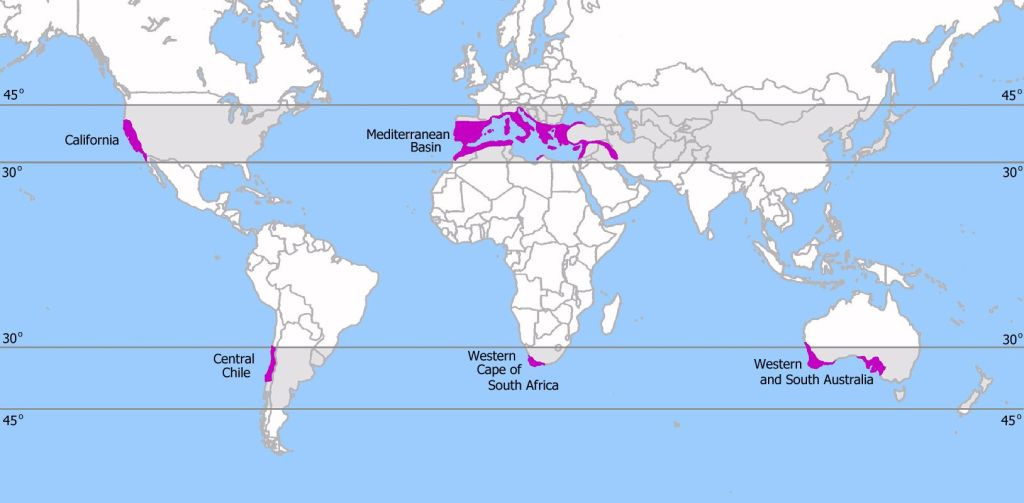
Five places on Earth have a Mediterranean climate: the sweet spot humans have chased since we figured out agriculture. Civilization starts where the olive tree grows. Real estate has always been about location.
Mild winters, warm summers, enough rain to grow things without drowning in humidity. California. The actual Mediterranean. Central Chile. A sliver of South Africa. Bits of Australia.
That’s it. Five patches on an entire planet.
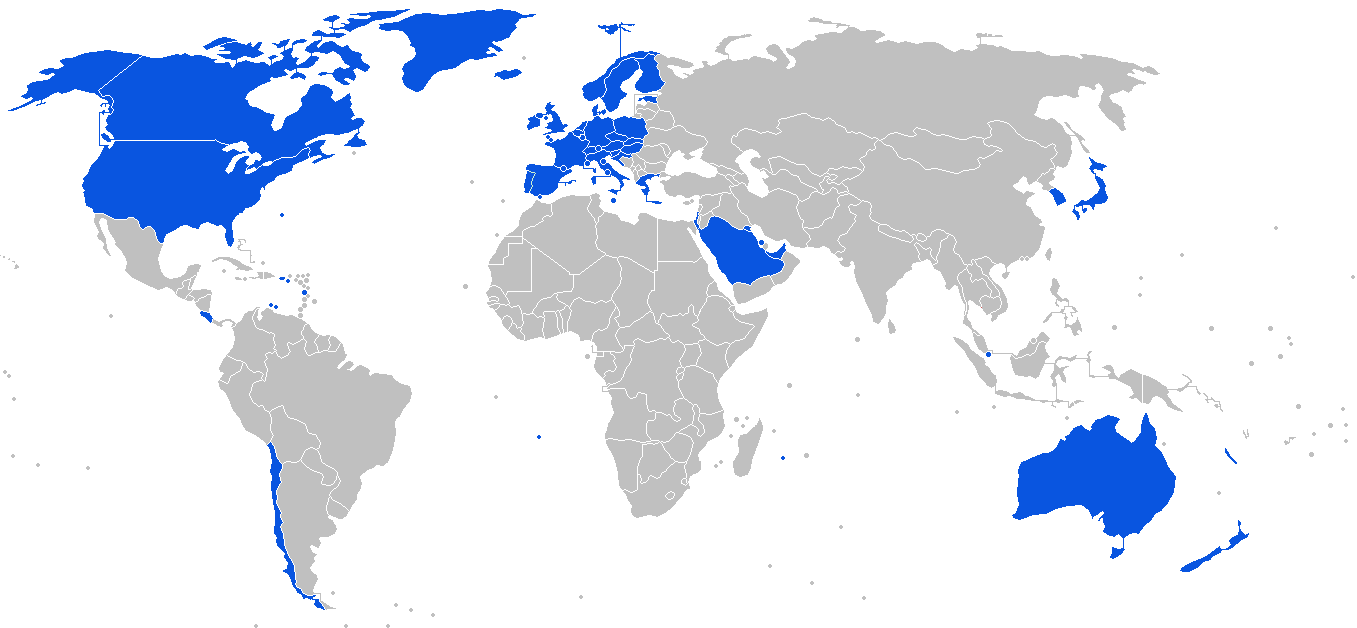
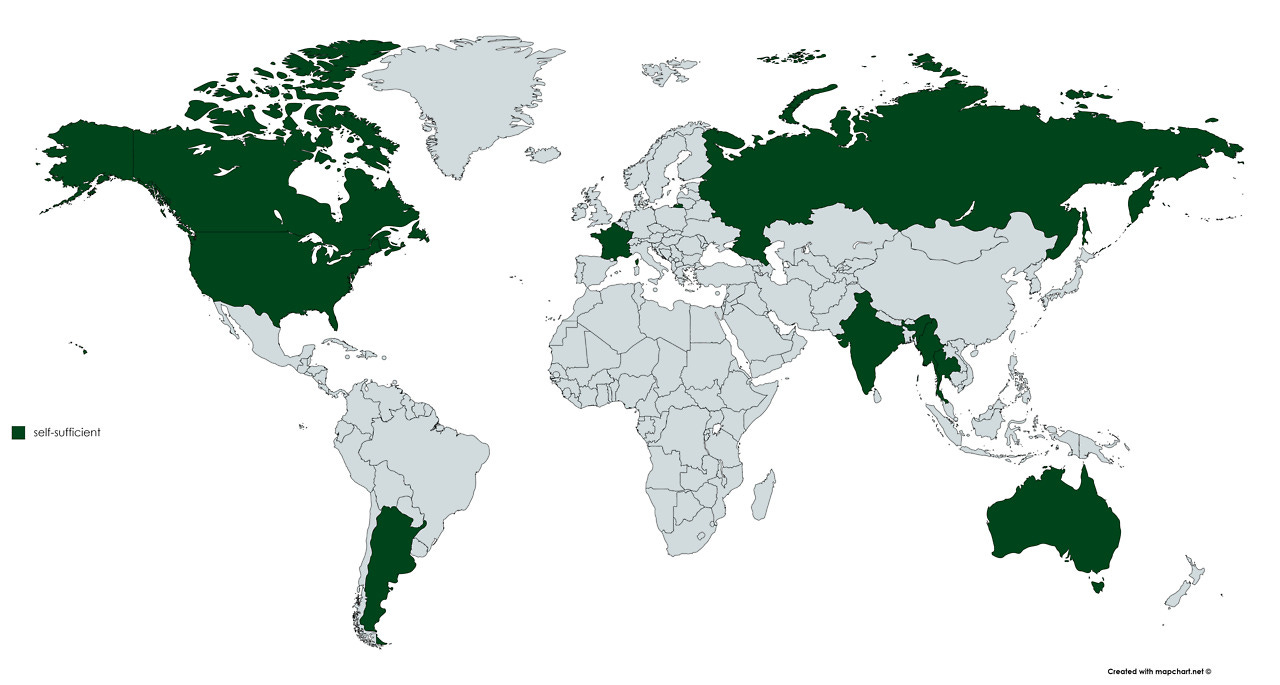
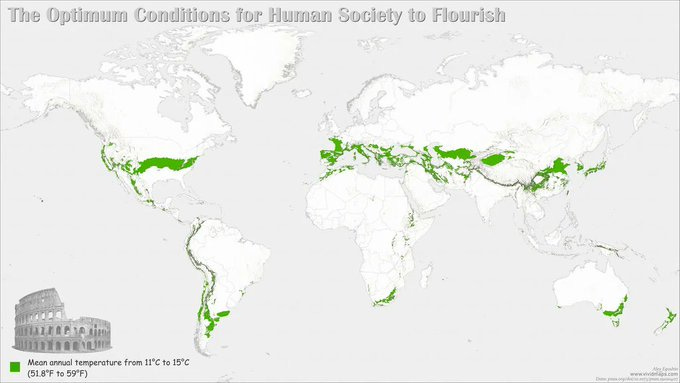
Four maps. Four filters. The overlap is a postage stamp.
Everyone who could get there already did. Centuries ago. Some even built walls around them.
The Formula
Two years on the road gave me this: abundant natural resources divided by population, multiplied by trust.
Trust doesn’t show up on any spreadsheet. You discover it in the first week.
In a high-trust society, you can leave your laptop at a café and come back to find it there. It’s about whether a handshake can still close a deal. Whether every interaction carries a tax – get it in writing, hire a lawyer, bring a witness – or whether that tax approaches zero.
It sounds soft. But it’s the hardest variable to build and the easiest to destroy.
High-trust societies compound. Low-trust societies discount.
The post-war emigrants knew this intuitively. Europeans fleeing bombed-out cities weren’t chasing weather. They were chasing the formula. USA, Canada, Australia, Argentina. Wide open spaces. Resources in the ground. Nobody around to ask what permits you’d need. Places where your surname wasn’t your résumé.
Most of those bets paid off. Run the formula today and the list narrows fast. Canada’s institutions are decaying faster than Canadians will admit – a healthcare system where ER waits stretch past 24 hours, a housing market that’s locked out a generation. Brazil and South Africa have massive resource bases and broken denominators. (Argentina glances back if Milei holds, but I’ve never been.)
The places that pass all four filters? You can count them on one hand.
Australia
Australia keeps winning the math. Minerals. Agriculture. Energy. Nearly 28 million people in a continent-sized space, and the per-capita allocation of everything is absurd.
Institutions boring in the good way. A contract means what it says. You can start a business without a fixer, rent an apartment without a bribe, and resolve a dispute without knowing a judge.
Seven months there confirmed what the spreadsheet suggested. Now I sorta know the coffee spots, the rhythm, how the place works. We run on vibes, after all.
The bear case is distance. An entire hemisphere between you and everyone you know. Holidays become logistics exercises. Your parents age on a different continent. The tyranny of geography means “I’ll visit soon” becomes a 24-hour flight and a week of jet lag. You’re building in a place that makes building easy – but you’re building alone, in the sense that everyone you built your life with until now is 16,000 kilometers away.
Weirdly, I enjoyed being far from everything. The pull of novelty outweighed the pull of belonging. Not the answer I was hoping for. But seven months on the other side of the planet, I felt lighter, not lonelier.
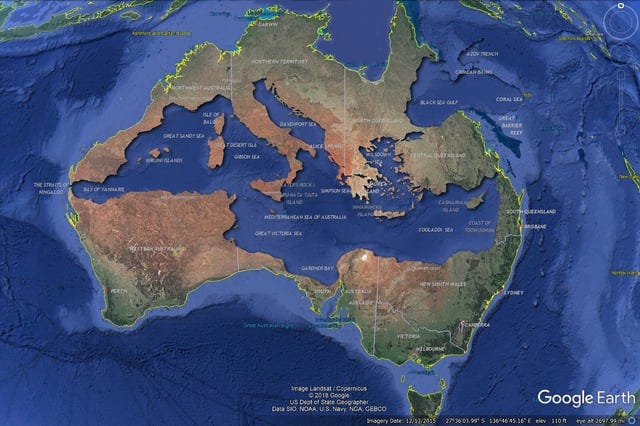
The housing market is a bitch – but that’s a price problem, not a trust problem.
The actual vulnerability is less obvious: Australia imports 90% of its refined fuel and holds barely a month of reserves. When the Strait of Hormuz closed in early 2026, hundreds of service stations ran dry – a continent sitting on world-class energy resources that can’t fill its own tanks, because it outsourced refining the same way the West outsourced rare earth processing.
The problems are solvable. Whether they’ll be solved before the next crisis is a different question.
The Forum Romanum Problem
Then there’s Europe. The “safe” option.
If you’ve been to Rome, you’ve walked past the Forum Romanum – that rectangular pit in the middle of the city where tourists peer down at ancient columns and crumbling temples. Two thousand years ago, that was the center of Western civilization. Now it’s six meters below street level. You need a ticket to see it.
The glory is literally buried.
The civilization that built the modern world – the scientific method, constitutional government, the Enlightenment – is still here. It got buried under bureaucracy, institutional arthritis, and a weird compulsion to apologize for everything that made it successful.
The question now in Europe is whether we have the permits to excavate.
I mean that literally. In Germany, the permits to dig up the past might clear faster than the permits to build something new. Tesla built its Berlin Gigafactory faster than Germany could approve it. They broke ground, poured concrete, erected walls, all while permits wound through bureaucracy. A “climate-friendly” company building electric vehicles, and still the paperwork nearly outlasted the construction.
The treasure is right there, but the process assumes you must be doing something wrong.
Funnily enough, Europe was where the formula was invented. Trust there was built over centuries: common law, property rights, the slow, boring accumulation of institutional credibility. The UK, Netherlands, Scandinavia, Germany, Switzerland – the proof of concept for what strangers cooperating at scale could produce.
Trust is topsoil. Takes centuries to accumulate. But all it takes is one bad decade to wash away.
That trust hasn’t collapsed. But it’s eroding. Not with a bang – with a thousand paper cuts. A public system that works a little less reliably each year. A bureaucracy that adds a form where last year it needed a handshake. A growing sense that the next generation inherits the paperwork but not the conviction that produced it.
The tragedy – and I say this as someone half-German, half-Spanish – is that Europe could dig itself out. The human capital is there. The institutions, however sclerotic, haven’t collapsed. But it requires believing there’s something worth uncovering.
Europe’s mood is managed decline, not renaissance. Nobody’s excavating. The Forum Romanum just keeps sinking.
The Bet
Australia doesn’t need excavation. It has above-ground abundance, natural and social.
Building requires the concrete and the handshake. The formula says Australia. So does my gut.
But the formula solves for abundance. Resources / population × trust measures where you can build, not where you belong.
The variable it lacks is the one I kept stumbling over. Call it the belonging variable. It’s not on the map because no one has agreed on how to price it. You find out what it’s worth by trying to leave.
Part of me thinks betting on Europe is romantic nonsense – a story you tell yourself to avoid admitting you don’t want to leave. The continent had its run. The future is being built elsewhere.
Part of me thinks running to the easy win is the hollowed-out thinking that created the problem. If every high-trust citizen with options emigrates, the trust leaves with them. You can’t excavate from Sydney.
The honest answer is that the formula has an answer and I’m stalling. Seven months in Australia said yes. So did I, two weeks ago. Two years of deciding still says not yet. The grass is greener where the math works.
The companion pieces – what climate does to civilizations, and the same resource-and-location logic, applied to AI:

Related: The AI Landlords: Who Profits from the AI Revolution


Frequently Asked Questions
What is the green pastures formula?
Natural resources divided by population, multiplied by trust. It’s a filter for deciding where to build a life. A country can have enormous mineral wealth or fertile land, but if the population is too large or the institutions are too corrupt, the per-capita allocation falls apart. Trust is the multiplier – it determines whether contracts hold, businesses can start without a fixer, and disputes resolve without knowing a judge.
What are Mediterranean climate regions?
Five places on Earth have Mediterranean climate: California, the Mediterranean basin itself, central Chile, a sliver of South Africa, and parts of southern Australia. Mild winters, warm summers, enough rain to grow things without drowning in humidity. Civilization has clustered around these zones since agriculture began. Layer on potable tap water, food self-sufficiency, and optimum temperature, and the overlap is a postage stamp.
What is a high-trust vs low-trust society?
In a high-trust society, a handshake can close a deal, you can leave your laptop at a cafe and find it when you return, and interactions don’t carry a hidden tax of lawyers, witnesses, and paperwork. In a low-trust society, every transaction has friction. High-trust societies compound over time. Low-trust societies discount. Trust takes centuries to build and one bad decade to destroy.
What is the Forum Romanum problem?
It’s a metaphor for institutional decay. The Roman Forum – once the center of Western civilization – is now six meters below street level in Rome. You need a ticket to see it. Europe’s institutions are similar: the civilization that built the scientific method, constitutional government, and the Enlightenment is still there, but it’s buried under bureaucracy and managed decline. The question is whether anyone still has the conviction to excavate.
Why does Australia keep winning the formula?
Resources, space, and institutional trust. Nearly 28 million people across a continent-sized landmass, with massive mineral, agricultural, and energy wealth. Contracts mean what they say. You can start a business without a fixer. The bear case is distance – an entire hemisphere between you and everyone you know – and a fuel vulnerability: Australia imports around 90% of its refined fuel and holds roughly a month of reserves.