

TL;DR: The US calls Europe a dying civilization. They’re not entirely wrong. The EU has two paths: become a player or remain a playground. The comfortable middle is closing. I’m European, watching from a continent that doesn’t have a playbook.
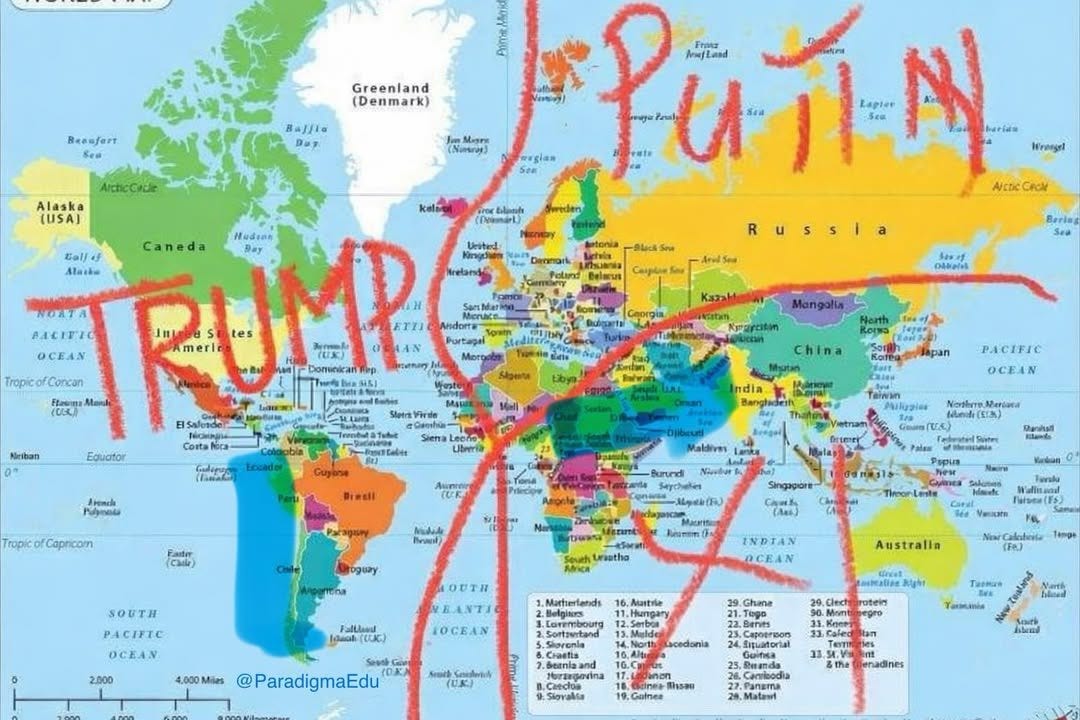
Trump’s National Security Strategy (NSS) has a section on Europe. And it starts on page 25. There are many American strategy documents. This one hits different.
“Continental Europe has been losing share of global GDP – down from 25% in 1990 to 14% today... But this economic decline is eclipsed by the real and more stark prospect of civilizational erasure.”
Civilizational erasure. From an official US government document. (gulp)
And the line that should be projected onto the walls of every EU summit:
“Should present trends continue, the continent will be unrecognizable in 20 years or less.”
(I explored the demographic side of this in Boomerlandia – this piece focuses on the strategic and institutional failure.)
I’m European. When Americans write off your continent as a corpse that doesn’t know it’s dead yet, you pay attention.
The Contempt
Previous American strategy documents handled Europe with diplomatic cushioning. “Valued allies.” “Shared commitment to democratic principles.”
This document doesn’t bother.
It questions whether NATO will make sense “within a few decades” when “certain NATO members will become majority non-European.”
It calls current European governments anti-democratic – not for being authoritarian, but for suppressing nationalist parties. It frames the EU as a sovereignty-dissolving project rather than a peace-building one.
The frustration underneath is palpable: why won’t you people do anything?
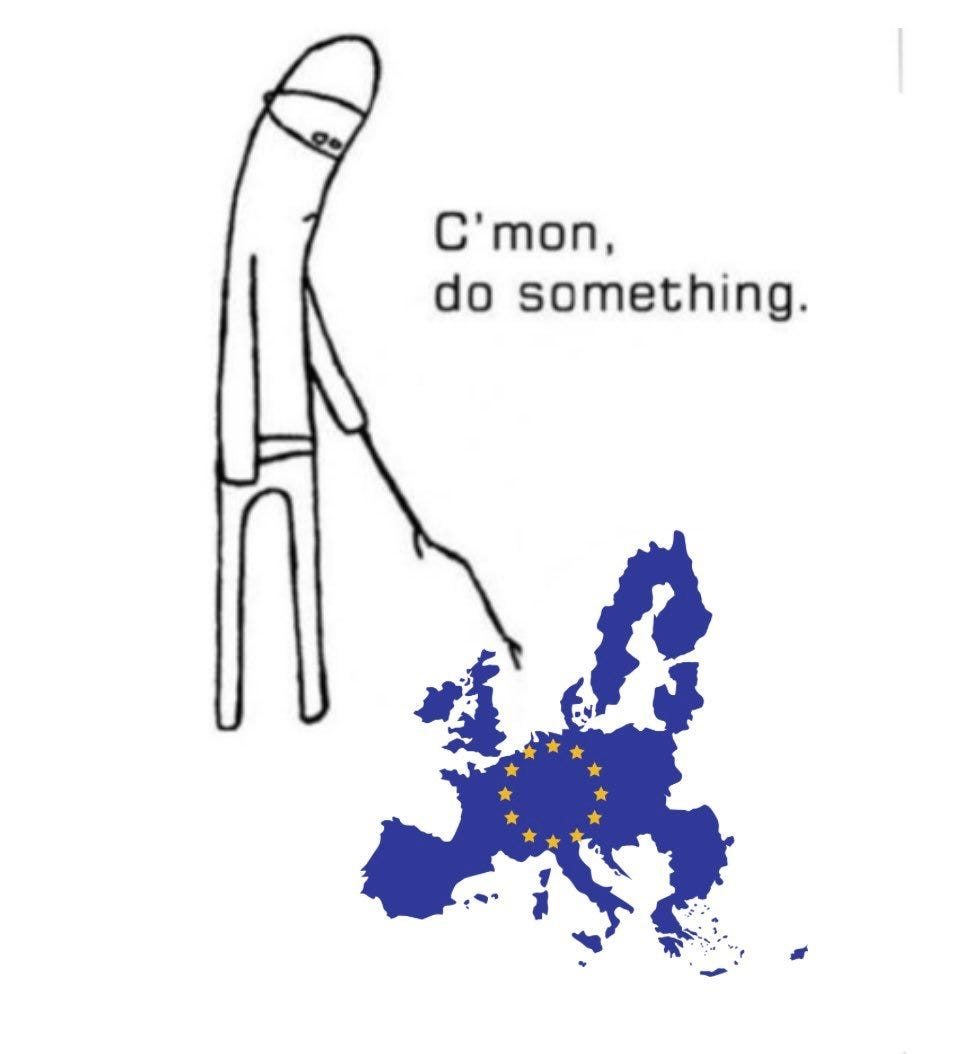
And honestly? They have a point.
The Paralysis
Europe’s response to the Maduro raid was peak Europe.
The EU issued a statement saying Maduro “lacks legitimacy” but the UN Charter “must be respected.” France condemned Maduro’s regime while criticizing the operation that removed him. Germany stayed quiet.
Condemn the disease. Condemn the cure. Propose nothing. Classic.
The Greenland situation is worse. Denmark is a NATO ally. Trump has threatened – repeatedly, on camera – to take Danish territory. The European response? Sweden “stands behind Denmark.” France expressed “solidarité.”
Solidarity. Against the country that actually defends them.
The NSS nailed the dynamic:
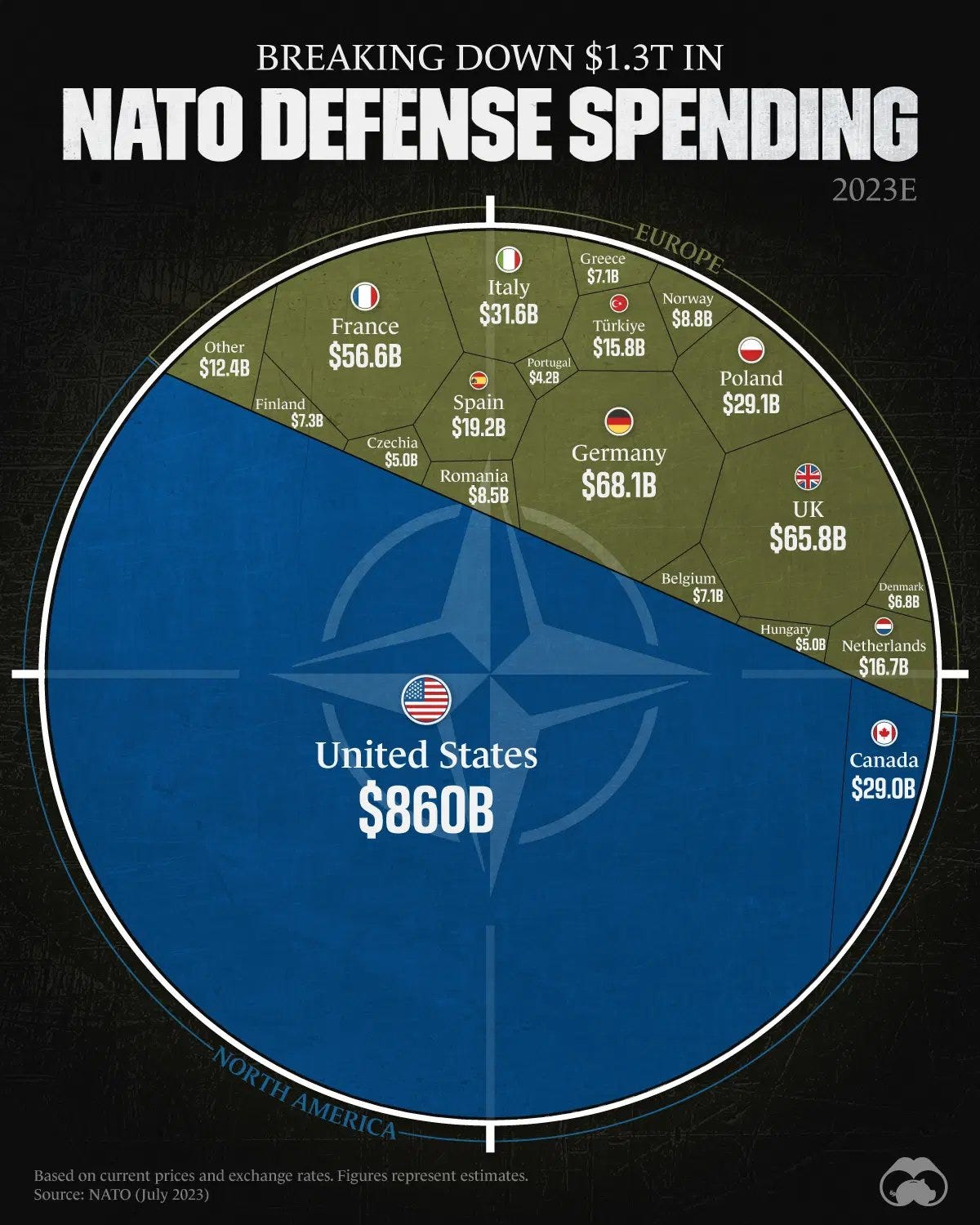
“European allies enjoy a significant hard power advantage over Russia by almost every measure, save nuclear weapons... Many Europeans regard Russia as an existential threat.”
American strategists still see latent power in Europe – $20 trillion in combined GDP, nuclear weapons (UK and France), significant industrial capacity.
What it lacks is the will – and maybe the belief that it deserves to continue existing as a distinct civilization.
The Post-War Consensus Is Dead
The post-WWII order had rules: American hegemony filtered through institutions, sovereignty respected, force used with coalition legitimacy. Germany could be an economic giant and military dwarf because America provided the umbrella.
That arrangement required America to care what “the international community” thought. This document says: we don’t.
Europe keeps issuing statements like the old referee is coming back.
Spoiler alert: he dead.
Two Paths
Europe has two options. Neither is comfortable.
Path 1: Federation.
Real political union. Fiscal integration – German taxpayers backstop Greek debt, and vice versa. Military integration – a European army that can make decisions without 27 countries agreeing on a font size. Border enforcement that works. A demos – a European people who see themselves as one political community.
Unfortunately, that demos doesn’t exist. The median German doesn’t feel political kinship with the median Romanian. That’s a cultural reality. You can’t bureaucratize shared identity into existence.
Federation would also require giving up the thing European elites value most: their positions in the current system. Brussels is designed for permanent negotiation, not decisive action. They have no incentive to build something that would make them obsolete.
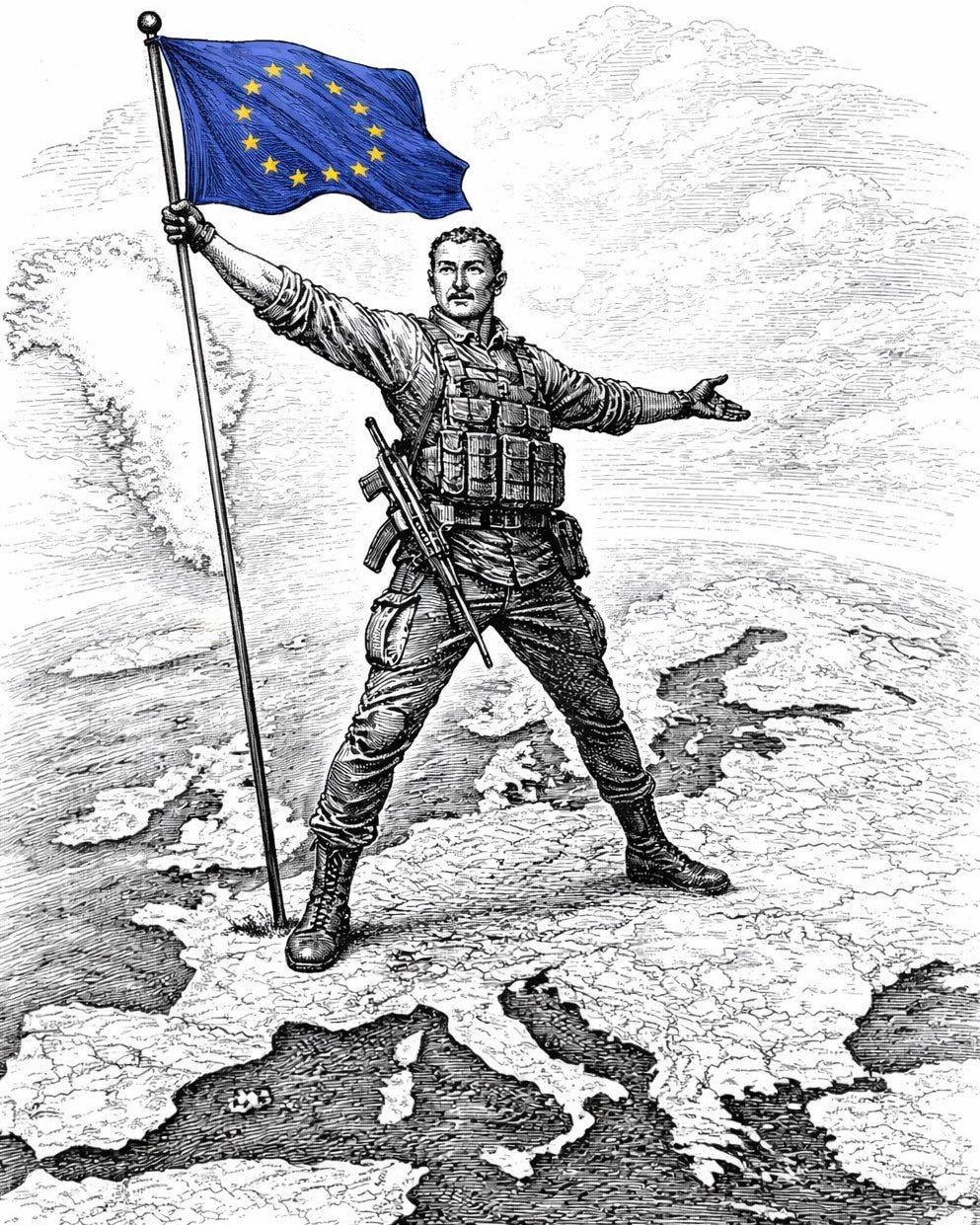
Path 2: Fragmentation.
The EU, as currently constructed, slowly implodes. Countries gravitate toward nationalist parties that address not luxury beliefs, but what voters care about – migration, energy costs, cultural preservation.
The establishment position (generous asylum, managed integration, dismissing cultural friction) has failed politically. Without change, nationalist parties keep winning. The establishment keeps calling these parties fascist and hoping that’s enough.
It’s not working.
Fragmentation doesn’t mean 27 separate nations pursuing 27 separate destinies. More likely: reconsolidation into smaller, tighter blocs.
The Blocs
If Europe fragments, here’s how it probably shakes out:
The Nordics. Already basically a bloc. Denmark, Sweden, Norway, Finland – tight cultural coherence, similar governance models, shared security concerns. Ironically, American pressure on Greenland might accelerate this. Nothing builds unity like a common threat.
Visegrád and Central Europe. Poland, Hungary, Czechia, Slovakia. Shared history of Soviet domination, similar skepticism of Western European preachiness, aligned on migration. Poland is increasingly America’s continental anchor – more aligned with Washington than Brussels.
The Mediterranean. Spain, Portugal, Italy, Greece. Tourism-heavy economies, debt-burdened, shared resentment of German fiscal discipline. When Germans lecture about Haushaltsdisziplin, Mediterranean countries hear: you partied, we didn’t, and now you’re paying for it (they’re not entirely wrong).
The Franco-German Core. This relationship was the EU’s engine for decades. But without the EU framework forcing compromise, what’s the shared project? Germany wants fiscal discipline and industrial policy. France wants strategic autonomy and prefers someone else pay for it. They might discover the partnership was a marriage of convenience – and the kids have moved out.
Smaller, tighter blocs might actually be more effective than the current EU.
A Nordic defense union that makes decisions in 48 hours beats an EU that needs unanimous consent to change the letterhead.
The Wake-Up Scenario
Greenland is the shock that changes everything.
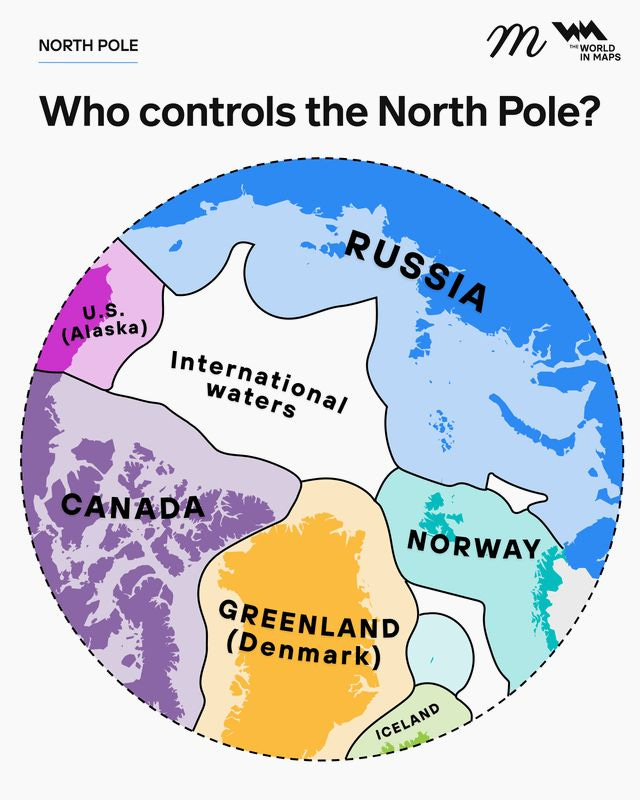
Trump threatening to take NATO ally territory is so far outside the post-war framework that it breaks the spell. European leaders lose the ability to pretend.
The choice becomes visceral: build real defense capacity or accept permanent American vassalage.
In this scenario, the Franco-German relationship gets a new project – not vague “ever closer union” but concrete military-industrial integration. A Maginot line not between each other, but surrounding the entire Union. An actual European capacity to act alone.
It would require Germany to rearm seriously. France to share its nuclear umbrella. Everyone to spend money they’d rather spend elsewhere (cough, cough, pensions). Politicians to tell voters that the free lunch is over.
Could happen. The threat environment has never been clearer. Russia is hostile. America is unreliable. China is watching.
But knowing Europe... crisis emerges, summits convene, statements issue, nothing structural changes.
What Would Actually Be Required
If Europe wanted to stop being a spectator, here’s the minimum:
Defense spending needs to hit 3-4% of GDP – not promises, actual budgets, procurement, capability. That means cutting something else, probably the welfare state, which will be politically brutal.
Command structures need integration: not 27 armies that theoretically cooperate, but actual unified command for rapid deployment. This requires surrendering sovereignty that most nations won’t surrender voluntarily.
Energy independence from hostile powers means nuclear (France has this, Germany abandoned it), LNG infrastructure (being built, slowly), and accepting that “Net Zero by 2050” may be incompatible with strategic autonomy.
Migration policy needs to become something voters actually accept. This is the issue European elites least want to discuss honestly.
And underneath all of it: a coherent European vision. American swagger comes from somewhere. Chinese confidence comes from somewhere. Europe has spent decades apologizing for its history. At some point, you need a story about why Europe deserves to exist beyond “we’re not as bad as we used to be.”
None of this is impossible. All of it is unlikely.
The Investment Angle
This is also an investment thesis.
European energy policy is a mess. Germany shut down its nuclear plants for ideological reasons and is now dependent on imported LNG and French nuclear. The “energy transition” has made European industry uncompetitive.
America prioritizes energy dominance. Cheap gas, oil (including Venezuelan oil), American willingness to burn fossil fuels while Europe handicaps itself with carbon targets.
If you’re thinking about investing in Europe, this is the structural headwind. Energy costs flow through everything – manufacturing, housing, consumer spending.
The continent that invented the industrial revolution is pricing itself out of industry.
Placing Bets
America is reasserting control over its hemisphere and telling the world the old rules don’t apply.
Europe has to decide: player or playground.
The middle path – comfortable irrelevance under American protection – is evaporating.
I’d prefer to live in a world where Europe matters rather than in a world where it’s just a nice open-air museum between empires.
That world requires Europeans to want it badly enough to sacrifice for it. To spend money, surrender sovereignty, make hard choices, and believe the project is worth defending.
I’m watching the playbook unfold from a continent that doesn’t have one.
Read Part 1: The New World Order for the full picture. ⬇️

On the art of statecraft and strategic compromise: Quid Pro Quo
One of your best articles yet. Deeply worrying at the same time, if you're willing to open your eyes and see what is unfolding in front of us.
I think the federation option is utopic, although on paper maybe the best one. The aggrupation into blocs is quite interesting, but as a Spaniard, I honestly fear for belonging to the Mediterranean group, which looks like an economic death trap.
My prediction is that the EU is so concerned about being “the good guys” that we will probably stand still without making any relevant changes, until it is too late. Open-air museum between empires it is…
every single sentence an (uncomfortable) bullseye. I share your concerns. Great part 2, I hope many will read it.