


Everyone tells you inflation melts your money. Nobody mentions where the water goes.
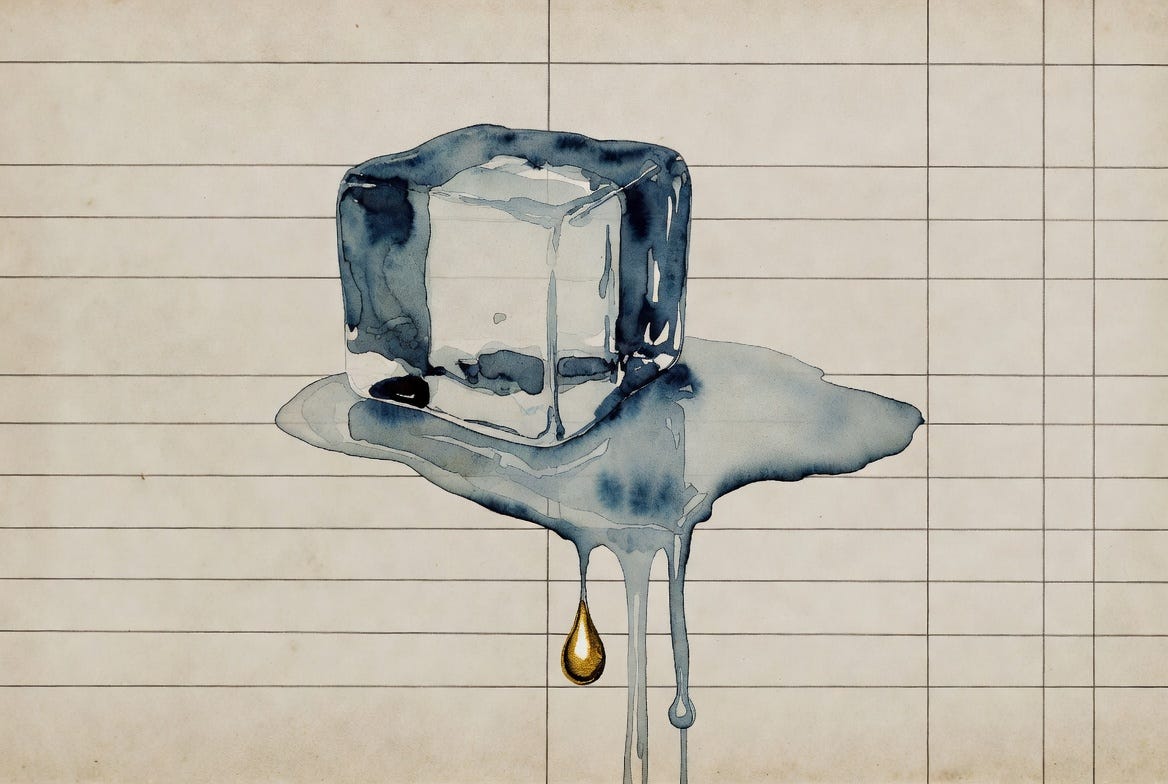
Money is an ice cube.
You half-know this already: leave it sitting in cash and it shrinks, a little smaller every year.
Since 2020 the dollar has shed close to a quarter of its purchasing power while the stock index priced in dollars keeps printing records. That’s the first trick. The cube melts, the number on the wrapper climbs, and you cheer the number.
I catch the melt in small, stupid ways. When I moved to Berlin in 2017, the Döner at my corner shop was 3,50 €. It’s pushing 9 € now – same skewer, same line out the door, and me paying it without a blink.
The Döner barometer never lies; it just climbs. Up, up and away…
Yet the “money is melting” crowd skips the second trick. The water doesn’t evaporate.
Every percent your savings lose, someone else gains: from the people holding cash and fixed wages to the people with debt and hard assets, nobody asked, no line on any statement.
Which tells you exactly who stays relaxed about it: the borrower whose mortgage shrinks in real terms, the government quietly inflating away a $40 trillion tab, the asset-holder watching the ruler bend in his favor.
When the people who set the temperature are the same people standing under the drip with a glass, “a little inflation is healthy” stops sounding like economics and starts sounding like the house explaining why the house always wins.
The cube was never simply melting. Someone was pouring it.
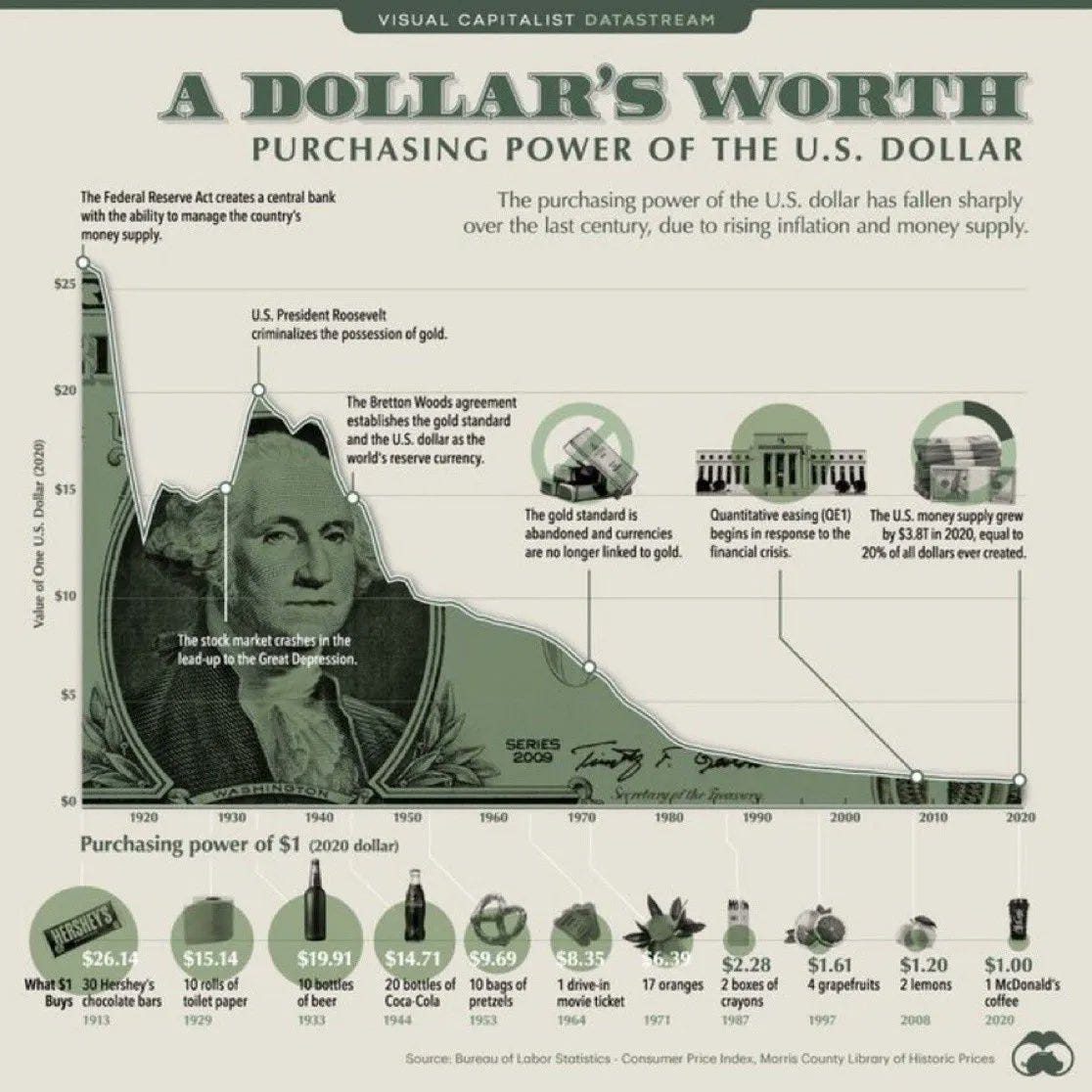
Related: Nothing Stops This Train – the melt itself, at length.

Sources: BLS Consumer Price Index