

TL;DR: You think your portfolio is going up. In reality, the measuring stick is just getting shorter. Here is why assets hitting “All-Time Highs” is often a warning sign, not a celebration.
I was a kid, clutching a cold 20-cent coin at my local Italian Eiscafé. I can still smell it – waffle cones and cinnamon. That single coin bought me a scoop of cinnamon ice cream (pure magic).
Today? That same scoop is over 2 €. A tenfold leap.
Time is relentless, sure. But inflation isn’t just “time.” It is a sly pickpocket standing right behind you.
Look at the crime scene:
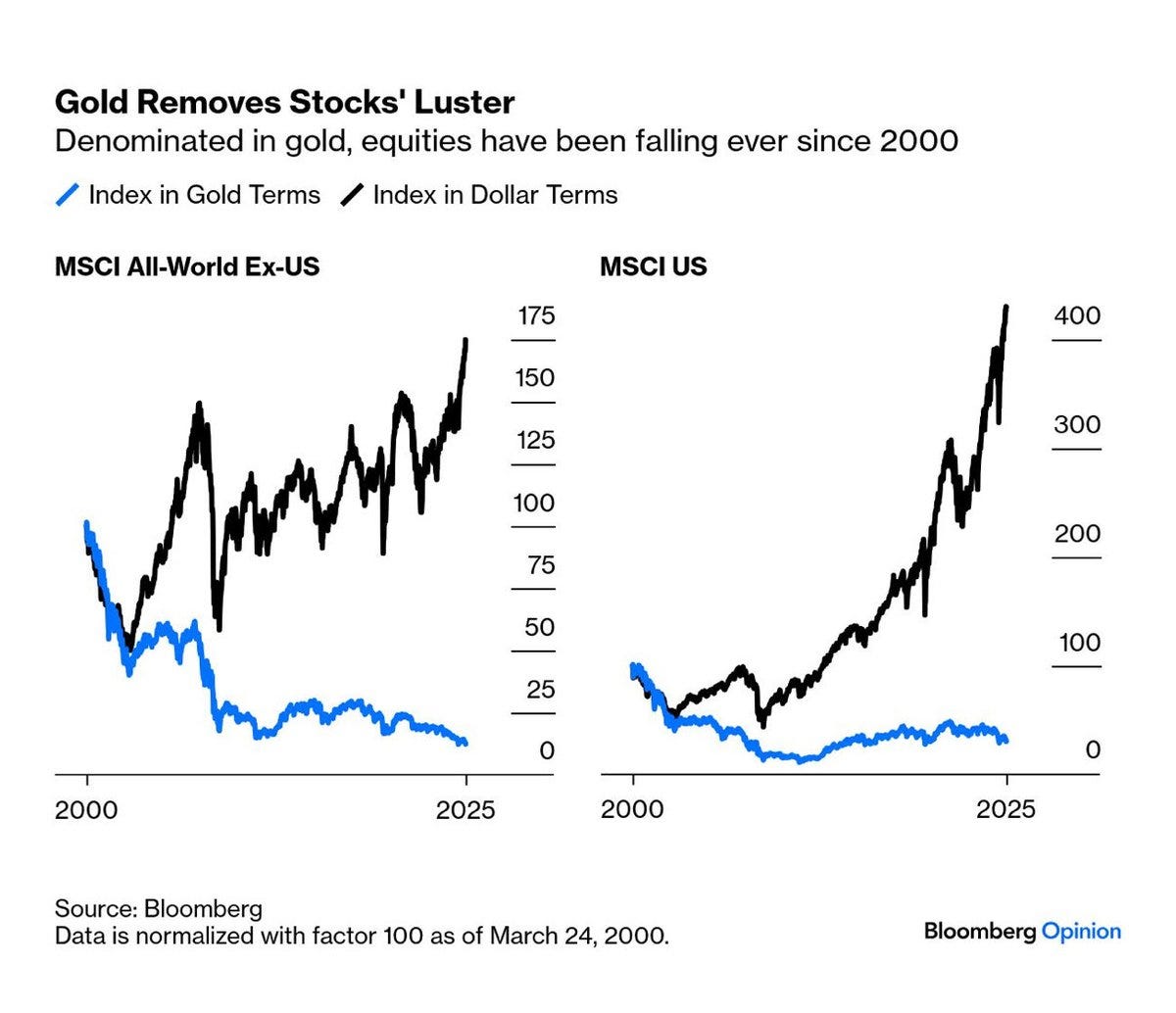
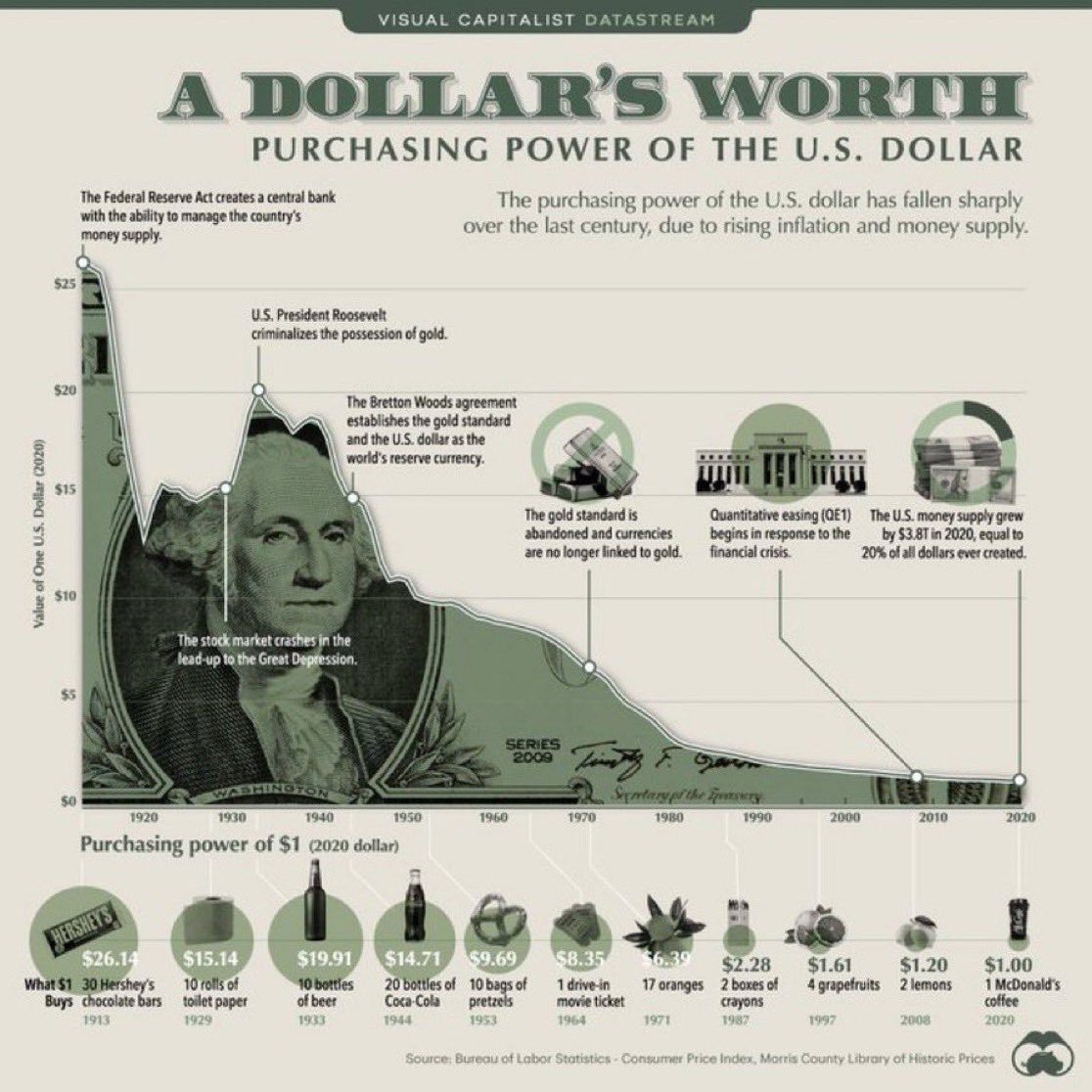
BREAKING: Assets aren’t winning, money’s losing.
Beat the Denominator
Here’s what central banks hope you never figure out.
Value is a fraction. Top number (Numerator): The price of the asset. Bottom number (Denominator): The value of the currency.
When the currency – the denominator – collapses, the price of the asset – the numerator – looks like it’s mooning.
You stare at your brokerage account, up 30% in two years, thinking you’re the next Warren Buffett. Bad news. You’re just holding a number that is inflating to match the devaluation of your cash.
It’s less “beluga caviar on a yacht” and more “struggling to afford brand-name tuna.”
Stocks, real estate, and even croissants (the true golden ratio) have shot up. But is it growth? Or is it just the currency pulling a fast one?
When a central bank prints money like it’s a hobby, everything priced in that currency climbs. Your stocks aren’t more productive. Your apartment isn’t better insulated. Your money is just shrinking.
Think of it like a ruler. If you shrink the inches, the table looks “longer.” But the table hasn’t grown. The ruler is just lying to you.
Need a laugh to cope? This clip captures the inflation circus perfectly:
Inflation: The Hidden Tax
A weaker currency doesn’t just jack up the price of your imported iPhone – it poisons the well.
For countries hooked on imported oil, food, or tech, devaluation is a stealth tax – it raises your costs without ever appearing on a ballot.
Real estate is the textbook case. Construction materials, energy, and labor get pricier, so property values soar – on your screen, anyway. But that “gain”? That is just you treading water while the pool fills up.
The Asset Price Mirage
Those S&P 500 or DAX all-time highs got you feeling like a genius? Pause.
In countries with runaway inflation (like Venezuela or Turkey), the stock market goes up thousands of percent. Are those investors rich? No. They are starving. The stock market went up because the currency went to zero.
We aren’t Venezuela, but the mechanic is the same. Hard assets like property act as a life raft, but if everyone is sprinting just to stay put, you need assets that actually outrun the decay – or assets that cut ties with the system entirely.

What I Actually Do About It
I’ve told you the ruler is lying. I’ve shown you that your portfolio’s “all-time high” might just be your currency’s all-time low. But awareness without action is just anxiety fuel.
I stopped measuring my portfolio in one currency. Periodically, I check my net worth in gold, in Bitcoin, in real goods – how many months of rent could I cover? How many plane tickets? When my portfolio is “up 20%” but buys the same number of plane tickets as last year, I haven’t gained anything. I’ve just treaded water with better graphics.
Not all assets outrun the denominator equally. Cash and bonds get eaten alive – they’re denominated in the very thing that’s shrinking. Real estate treads water but it’s illiquid and comes with carrying costs. Equities with pricing power can outrun inflation because companies can raise prices – that’s why my ETF bet is Nasdaq 100, not the S&P. Hard assets preserve but don’t compound. Bitcoin is the best-known asset explicitly designed to have a fixed supply in a world of infinite money printing. I’m not a maxi, but I understand the thesis.
Every year, I do a gut check: can I afford more or less of the life I want than last year? If my portfolio is up but my purchasing power is flat, I’m not winning. I’m just not losing as fast as cash holders.
And then there’s the cynical part. If the system is a confidence game, narrative timing matters. Not market timing – that’s a fool’s errand – but knowing when the story shifts. When “AI will change everything” becomes “AI is overhyped,” when “rates will stay low forever” becomes “rates are staying high” – I rotate. The true believers hold through narrative shifts because they trust fundamentals. I trust stories. And stories change.

The train isn’t stopping. The money printer goes brrr. My portfolio will probably keep hitting “all-time highs” for years to come.
But now I know: that’s not necessarily me winning. That might just be the ruler shrinking.
This is a companion piece to Everything is a Ponzi Scheme. Read that one if you want the full picture. ⬇️

Here’s a special treat. The money problem, explained (it’s Bitcoin-pilled, but the diagnosis is solid even if you don’t buy the prescription):
The inflation conundrum should actually be a basic concept, but unfortunately the average Joe does not understand it, which is why governments have been printing money freely for decades. A bonus lesson that could be drawn from here is that the real goal of investing is not getting rich, but minimizing your losses due to inflation. And if you're really good at it, maybe even getting some extra gains.