


I escaped the machine. Then I rebuilt it at my desk, from memory.
Nearly three years ago I removed external requirement from my life. No boss, no meetings, no quarterly anything.
The plan, as I understood it, was freedom.
Here is what freedom looks like at my desk on a random weekday: a publishing schedule nobody set, for a newsletter nobody reads commissioned, with a deadline I invented, which I will absolutely not miss, because missing it would feel like failing an exam nobody is grading.
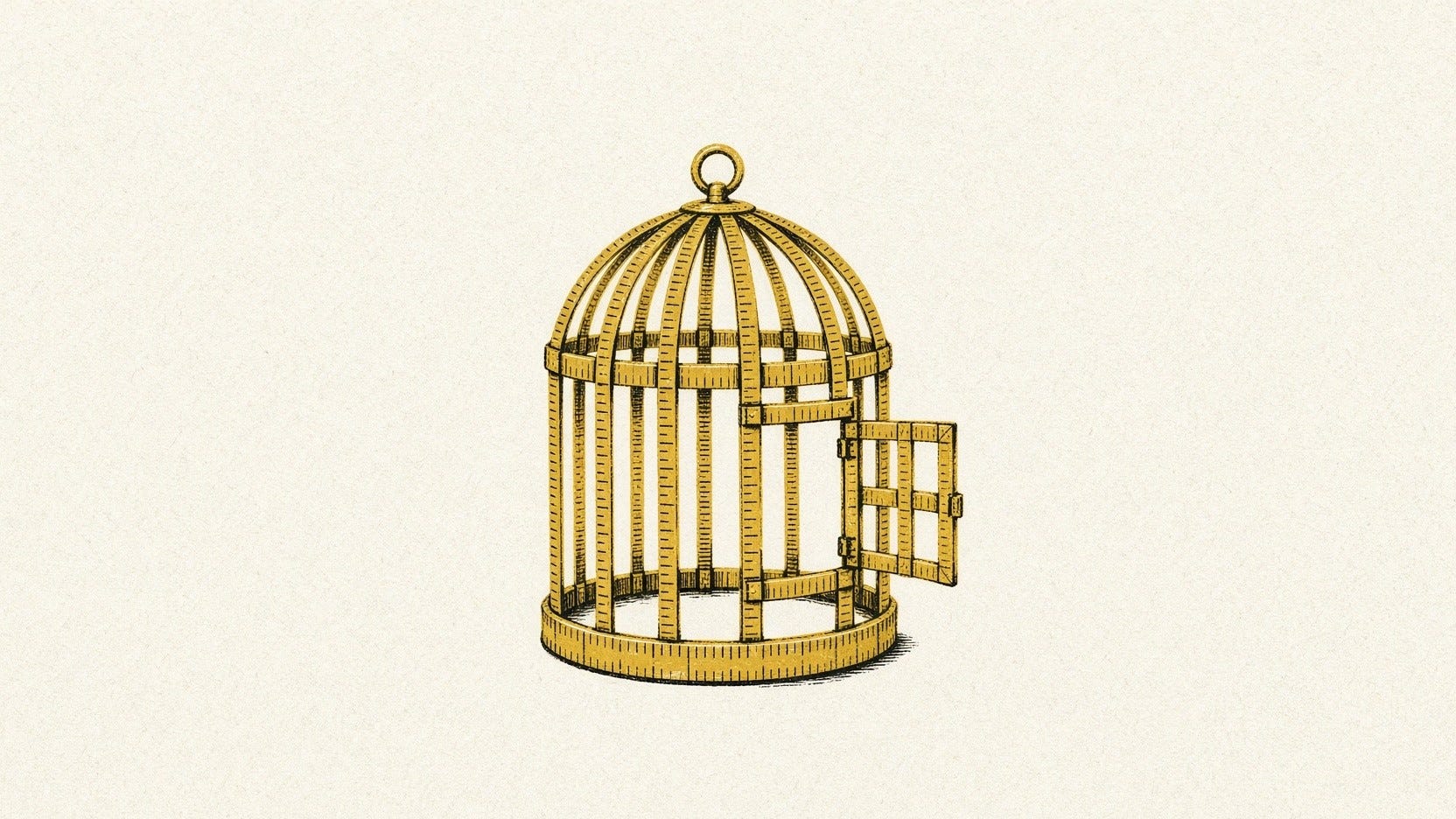
I used to think work was a cage with a paycheck for a lock.
Then the door opened and I stood in the doorway and built a smaller cage, artisanal, to my exact measurements. Weekly essays. Portfolio reviews. Projects with milestones.
Out of the machine, I immediately began manufacturing urgency from scratch.
The polite explanation is discipline. How commendable.
The truer one is that work was never just the rent. For a couple of centuries it’s been the pre-installed answer to the question underneath all the other questions – what are you for? – and when you uninstall it, the question doesn’t leave. It just stands there, unemployed, waiting for reassignment.
In June I gave this part of the who-owns-the-machines debate a few lines. It deserved more.
Two economists priced the lost assignment for one person losing one job – spoiler: it comes out at several times the lost wage. Nobody’s priced it for several billion people at once, when the pre-installed answer gets automated, whether they’ve saved up or not.
I’m a best-case scenario kinda guy: curious, solvent, self-directed, free by choice. And my report from the far side is that I didn’t retire the fire. I just became its only supplier.
Related: Who Owns the Hammer? – where the deadlines first showed up.
