


TL;DR: I built two web tools in a weekend without writing code. The ideas took weeks. Taste is the bottleneck now – except for the second wall: getting anyone to care. This is me working out why I don’t mind.
A rainy weekend in Amsterdam. That’s what it cost to turn two essays into working web tools.
The essay (Money is Stored Time) took weeks. The tool took an afternoon.
I described what I wanted. Claude wrote the code. I argued with the output until the interface felt right.
The ratio bothers me. Weeks of thinking versus an afternoon of building. And the building wasn’t the bottleneck – the decision-making was.
Try them.
Money is Time turns prices into hours of your life. Enter your salary, enter a purchase – find out whether those sneakers cost you a Tuesday.
The Midwit Detector scores your gut calls on a bell curve. Ten questions, three answer styles – are you a Brainlet, a Midwit, or a Jedi?
The Wall That Fell
Five years ago, the distance between “I have an idea” and “the idea runs in a browser” was a wall of skills I didn’t have: JavaScript, CSS, deployment, debugging the thing at 3 AM when it broke on mobile Safari.
Now it’s a conversation. I talk to a model and get back something that works. The wall evaporated – and a non-technical fool like me is shipping code to the Vercel cloud.
Call it miracle inflation: we’ve watched so many walls fall that we’ve stopped noticing the rubble.
But here’s what didn’t evaporate: the thinking. The Midwit Detector took two evenings to build; the real work was the questionnaire, because an interactive bell-curve meme only lands if the questions actually sort a Brainlet from a Jedi.
Taste Is the Bottleneck
If everyone can build, what’s scarce?
It ain’t the tool. I could mass-produce Money is Time variants all week – a sleep calculator, a commute-cost converter, a subscription audit. Claude would happily oblige. Each would take a day. Each would be forgettable, because the insight underneath would be thin.
What’s scarce is the taste. The weeks of living that produce a sentence tight enough to carry the weight. “Money is stored time” is five syllables. The tool just makes it harder to forget.
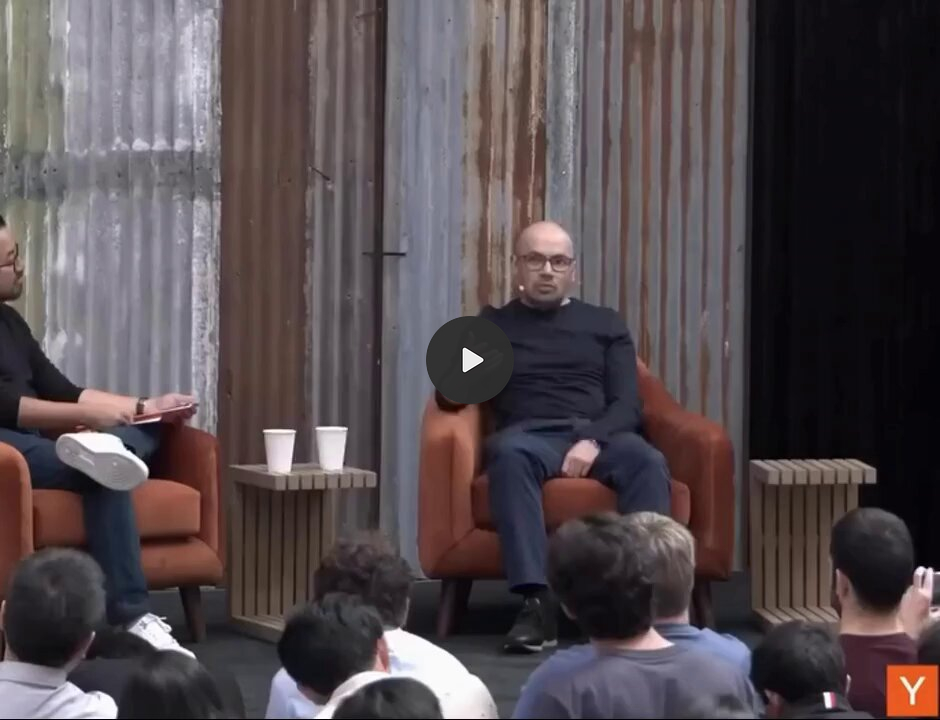
Demis Hassabis (Google DeepMind gigachad) made the same point this year: no vibe-coded AAA game has topped the App Store yet – it still needs craft, he said, and taste. Same word I just used – he got there from games, I got there from essays.

So far, so flattering. I made the tools, the tools have taste, the taste is the moat. Tidy.
Except there’s a wall I’ve been carefully not looking at.
The Other Wall
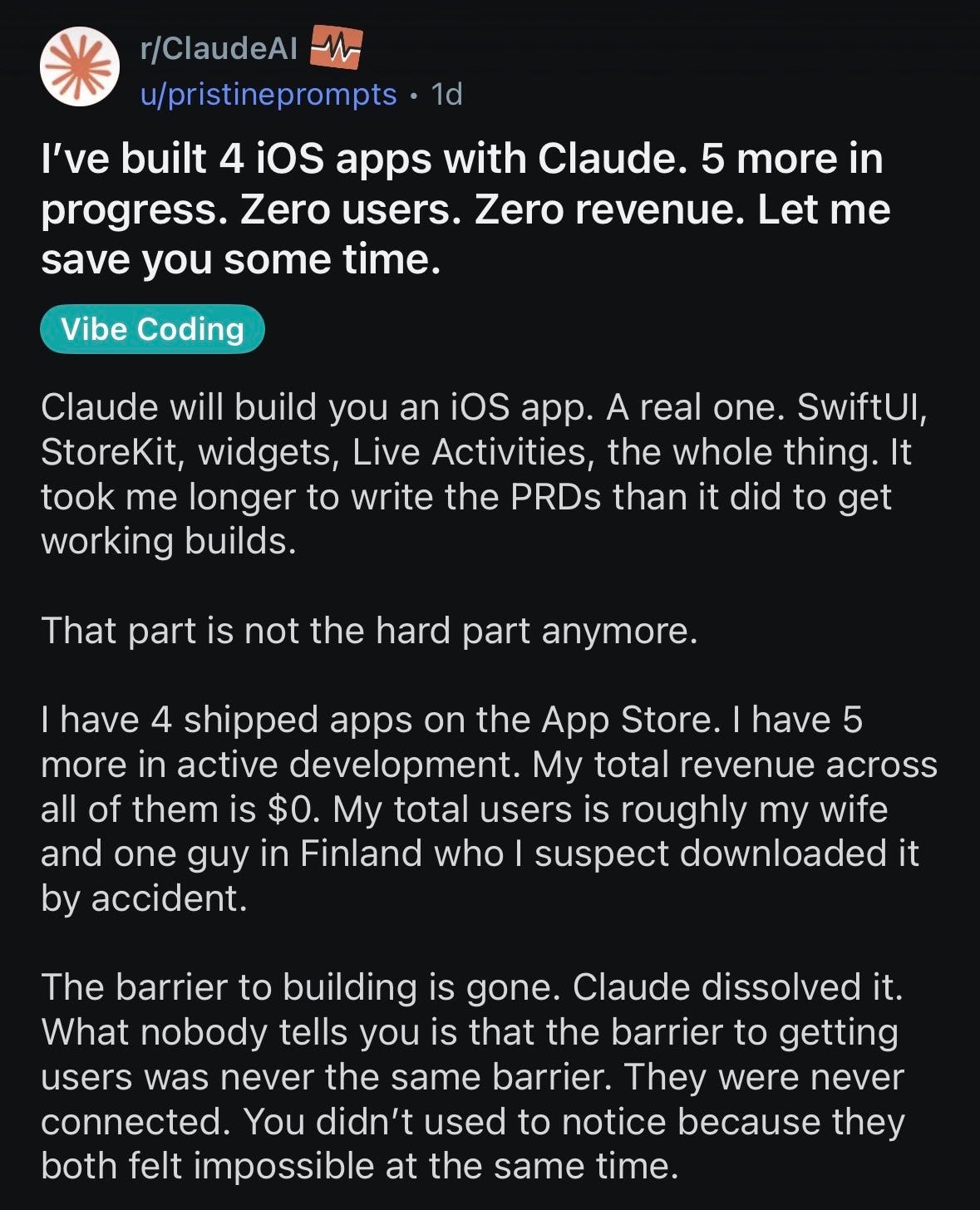
A Reddit post from someone with four apps shipped, zero revenue and a user base of his wife and one guy in Finland put the second wall plainly: the barrier to building is gone, the barrier to getting users was never the same barrier, and the two were never connected.
He’s right. And he’s half wrong.
Right that there are two walls, and I’ve spent this whole essay admiring the first while standing at the foot of the second. Half wrong that they’re unconnected: distribution is just taste pointed downstream – the zero-users problem is usually a nothing-worth-distributing problem.
Which would make a great mic-drop, except I’m in no position to drop anything. How many people use Money is Time and the Midwit Detector? Enough to count without taking my shoes off. I write this newsletter into something close to a void. I am the poster child for build-is-easy, audience-is-hard.
And yet – here I am. Links and all. Optimizing an essay to get you to click them.
So which is it? Either I don’t care about users, in which case the links are a strange thing to include. Or I do, and “taste is the moat” is the flattering story I tell myself while one guy in Finland and I keep each other company. Maybe I’m lying to myself. Maybe both are true at once, and I’ve stopped finding that embarrassing.
That rainy weekend in Amsterdam was me staying dangerous at the edge of this stuff – learning what an agent can and can’t do, how far the conversation stretches before it snaps – because that’s the game I actually care about. The fluency is the return.
Why pour a weekend into tools for an unsolicited, half-baked philosophy diary? Because I can just do things now, so I do. The users would be nice. They’re not the point – pretending otherwise would be the pose.
Which brings me to something a twenty-year-old in a gold dress understood better than I do.

Alysa Liu quit figure skating at sixteen. Burned out, done, off to college to be a normal person. Two years later she came back – and at the Milan Olympics in February she looked like she was having the time of her life. Grinning through the whole program. She won gold. First American woman to take the figure-skating title in twenty-four years.
You can’t beat someone who’s having fun.
I’m running the more extreme version – I’m not even keeping score. Which is either enlightenment or a very relaxed way to lose, and I genuinely can’t tell.
Related: Money is Stored Time – the essay behind the first tool · Don’t Mid-Curve It – the essay behind the second · Miracle Inflation – why the rubble stopped registering · Human Language Model – why taste became the bottleneck.


Sources: Hassabis with Garry Tan, Y Combinator, April 2026 · Alysa Liu, Milan 2026
AI removed the wall between “I have an idea” and “I built it”, only to reveal the much older wall between “I built it” and “please, somebody use it”.
Also, the guy in Finland is probably wondering why he keeps getting all these apps sent to him.
building is outfashioned, sure but, is it perhaps possible that abundance societies have forgotten what it was not to have done it? Food for thought...